
Diesel Fuel Shortage in 2026: War Impact, Diesel Supply Risks, and Price Surge


A diesel fuel shortage doesn’t start at the pump; it starts with global instability. This ongoing Iran-Israel war is pushing diesel price volatility and tightening diesel supply. In this situation, fleets that prepare early will protect margins, and those that do not will struggle to keep trucks moving.
The talk of U.S. diesel fuel shortage is not something we have not heard before. But since March 2026, the conversation is different than ever before. The fact that tensions are rising between countries due to the Iran-Israel war is really affecting the diesel supply, making it hard to predict the upcoming diesel price. For fleet managers, this is a big deal as it impacts the operations of a fleet company on a large scale.
As a fleet manager, it’s your job to keep an ear to the ground. You need to know when change is coming so you can prepare, whether it means sprucing up trucks for more stringent inspections, making changes to your routing so you can avoid areas with upcoming construction, or preparing for hard times when prices rise. Sometimes, though, the things you hear through the grapevine simply aren’t true. That’s the challenge: sorting the facts from fiction.
What’s the truth? Is there a fuel shortage coming? We need to dig into what’s being said and see if the facts stack up.

Causes of the Diesel Shortage
Usually, there are multiple reasons for a diesel fuel shortage. It tends to occur when a significant number of various things strain the diesel supply simultaneously. Today, in 2026, the biggest reason is the geopolitical instability, particularly due to the Iran-Israel war. It is impacting oil flow, refinery production, and the diesel fuel supply all over the world.
The other factors that contribute to diesel fuel shortage include the refinery maintenance cycles, old infrastructure, and transport network issues. Although the overall quantity of diesel fuel might remain constant, such issues can cause the diesel fuel supply to be tightened in some regions, making it appear like there is a diesel fuel shortage even though the actual production did not reduce significantly.

Current Diesel Shortage Updates
The most recent war update is that there is growing tension in the Middle East, and this is already affecting the trend of diesel prices. Uncertainty is fast responded to by markets, and even the threat of unrest in oil-producing regions can drive up the price of diesel. This does not necessarily imply that there is an immediate diesel fuel shortage, but it is an indication that there are tightening conditions of diesel supply.
The U.S. is not experiencing any confirmed nationwide diesel shortage yet, but volatility of the diesel fuel supply and the increase in levels of diesel prices are putting a strain on the industry. The temporary fuel limitations might be seen in some areas due to the localized U.S. gas shortage or gasoline shortage situations, particularly when the distribution channels are overloaded.

Diesel Shortage and the Global Fuel Crisis in 2026
The 2026 diesel crisis impacting the world is not so much about the lack of fuel, but about the vulnerability of the diesel supply chain. The supply of diesel fuel is under constant stress due to geopolitical conflict, refinery constraints, and global demand shifts, thus price spikes and local shortage tendencies become more probable.
Impact of the Iran-U.S./Israel Conflict on Fuel Supply
The Iran-Israel war has been a significant source of impact on the diesel supply in the world. Any upsurge raises doubt in oil markets, leading to immediate changes in the diesel price. Market fear, without actual disruption of supply, can restrict the diesel fuel supply and have ripple effects in the logistic networks of the world.
Disruptions in the Strait of Hormuz
The Strait of Hormuz is one of the largest risks associated with the diesel fuel shortage update. This is a major route through which oil flows in the world. Any interference in this case would immediately affect the world’s supply of diesel fuel and cause a diesel crisis and a sudden rise in the diesel price in various parts of the world, and the U.S. is one of them.
Rising Diesel Prices and Supply Constraints
With the increased tension, the volatility of diesel prices is the largest worry among fleet managers. Although diesel fuel supply may be technically accessible, it can be strained due to high costs. Few refining capacities and rising world demand further restrict the diesel fuel supply, and fleets find it more difficult to have predictable fuel costs.
Impact of Diesel Shortage on Fleet Operations
To fleet operators, a diesel fuel shortage does not necessarily imply that the trucks come to a halt, but it implies that the cost increases rapidly. Rising diesel prices directly affect margins and the businesses have to absorb the cost or transfer it to the customers. In competitive markets, that’s not always possible.
Routing, scheduling, and overall efficiency involve fuel volatility. Any unexpected surge in diesel price or a local U.S. gas shortage can derail delivery schedules and decrease profitability. That is why it is as significant as loads to manage diesel fuel supply in the most efficient way.

Preparing for a Diesel Shortage in 2026
Is that an excuse to ignore proper planning and preparation for fuel shortage variability in the market? Definitely not. As a fleet manager, part of your job is to keep your fleet moving, making deliveries on time. That means planning for worst-case scenarios. So, what can you do?
Have a Reserve Fund
One of the best things you can do is have a reserve fund of cash to support your logistics if the price of fuel spikes. Diesel price spikes can happen quickly during global conflicts or supply disruptions. Therefore, one of the best things you can do is have enough money in reserve to insulate you against these spikes, trusting that everyone involved wants diesel fuel supply lines to be restored as quickly as possible.
How much should you have in a reserve fund? That depends on your fleet. Estimate your ongoing fuel costs, pick a price point you might expect fuel to rise to in a diesel shortage or crisis, and calculate how much you’d be spending based on your fleet’s fuel consumption. Add a bit extra for good measure, and you’re likely in a decent place.

Encourage Drivers to Use Fuel Intelligently
In times of fuel shortage, increasing the efficiency of usage can be an excellent way to combat rising costs and scarcity. There are a lot of different things you can do to improve fleet fuel efficiency, but one of the biggest is training your drivers to abandon habits that burn excess fuel.
- Reduce sudden speed increases and braking whenever possible; sudden changes burn more fuel to move the mass of a truck than longer, slower acceleration and deceleration.
- Leverage cruise control on longer journeys. Steady use of power, rather than slowing and speeding up on the highway, results in smoother, more even, and, on average, lower fuel consumption.
- Slow down speeds. At highway speeds, traveling at 65 mph burns 27% less fuel than traveling at 75 mph. It may be less time-efficient, but it’s vastly more fuel-efficient.
- Reduce idling. Whether this means taking alternate routes that don’t involve stopped traffic or just shutting the truck down when the driver needs to stop somewhere instead of leaving it idling, idling burns fuel for no benefit.
We have a full guide on improving fleet fuel efficiency you can check out here.

Optimize Routing for Lower Fuel Consumption
Another way to boost fuel efficiency is routing. A constant speed along a route is better than a route with a faster top speed but more frequent starts and stops. A route with less turning means less time stopped and idling. This, too, is covered in the guide linked above.
Luckily, as a fleet manager, you don’t need to do all of this manually. Modern software for fleet tracking has plenty of map and traffic data that can be used to algorithmically optimize travel routes with an eye for fuel efficiency, especially important during a diesel shortage or when managing diesel fuel supply more carefully.
Consider Building Your Own Stockpile
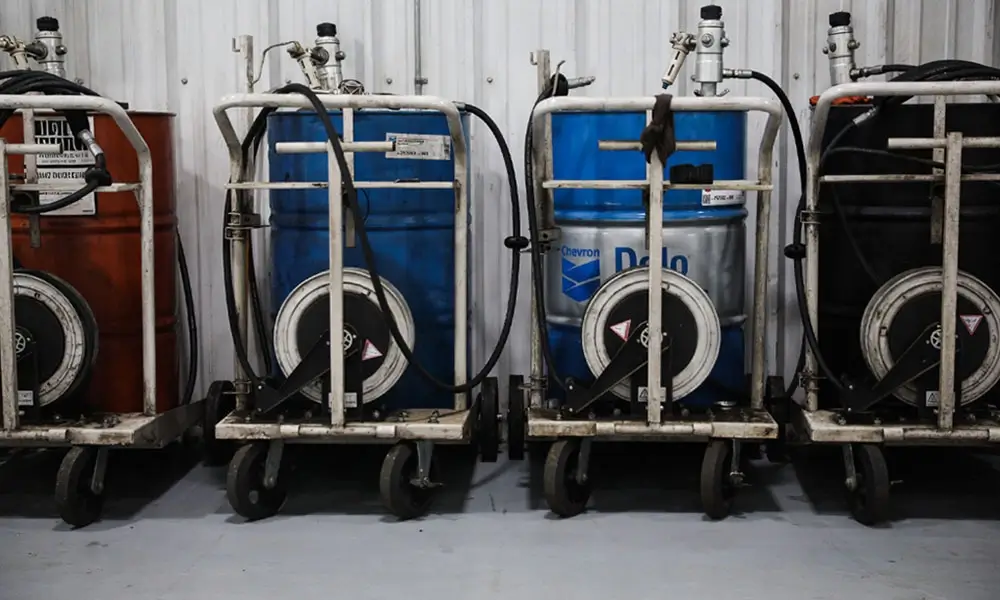
While studies show that diesel fuel can start to go bad after 28 days in storage, under the right conditions, it can remain usable for as much as 6-12 months.
Now, you’re pretty unlikely to be building up a year-long stockpile of your full fleet’s fuel consumption. However, an increasingly relevant strategy you can use amid growing concerns like “Why is there a diesel shortage?” or “Is there a shortage of diesel fuel?” is to maintain at least a little of a stockpile, so you can insulate yourself against brief spikes in scarcity and price.

Have Emergency Contacts in Case of a Disaster
In the case of a true disaster, whether it’s an adverse weather event or something worse, know who to call. Particularly in light of the question “Is there going to be a diesel shortage?” true emergency preparation goes well beyond having a set of phone numbers on hand, but it’s something that never hurts to keep around.
Control Maintenance Costs to Offset Fuel Pressure
In case of an increase in the diesel price, it is important to control other costs of operation. Like the cost of oil changes for the fleet can be controlled to balance the total spending of the fleet and safeguard the margins in case of a diesel fuel shortage.

Work with EPIKA
At EPIKA Fleet, we help support a wide range of different fleets for all kinds of needs, whether it’s preventative maintenance, information, or emergency repairs.
By working with us, you can tap into a larger network and infrastructure of support than you can set up on your own and take advantage of our greater pool of resources. All you need to do is contact us to get started!
FAQs
Is there a gas shortage in the U.S. right now?
The gas shortage in the U.S. is not widespread, but a localized gas shortage or gasoline shortage may arise, which may be caused by distribution problems or other temporary interruptions.
Is there a diesel shortage in the U.S.?
No nationwide confirmed diesel fuel shortage is being reported at the moment, although the global factors such as the Iran-Israel war and the instability of the market are putting a strain on the diesel supply.
What causes a diesel fuel shortage?
Disruption in the supply chain, refinery constraints, and geopolitical tussles normally lead to a diesel fuel shortage that disrupts the supply of diesel fuel.
How does a diesel shortage affect fleets?
It drives up the diesel price, decreases the profit margin, and creates operational challenges in terms of routing, scheduling, and fuel supply.
How can fleets reduce the impact of a diesel shortage?
Fleets can minimize the impact of diesel fuel shortage by enhancing fleet fuel efficiency, optimizing routes, keeping reserve funds, and being strategic about diesel fuel supply.