
Fleet Manager: Roles, Responsibilities, and Duties

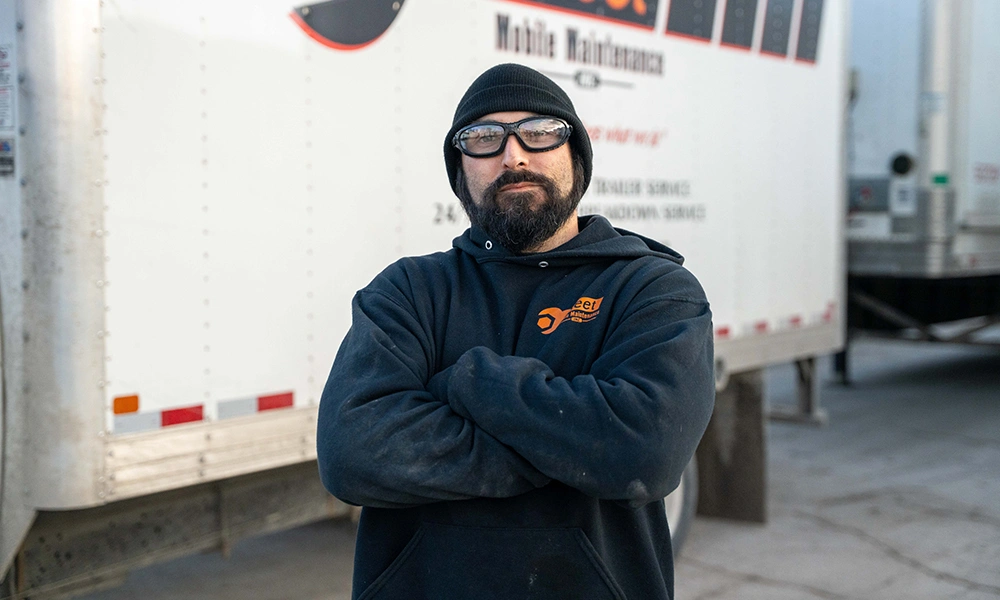
Fleet manager role is very crucial and important in the fleet industry; the fleet manager is the person who takes care of all the aspects of maintaining trucks, as well as ensuring that drivers are happy and safe out there. The sense of responsibility of a fleet manager is reflected in every mile covered.
Global Market Insights reports that ‘The global market size of the fleet management is growing at a rapid pace; it is estimated to be around $97.6B till 2034.’
These individuals are balancing between vehicle maintenance, driver relations, compliance, and the bottom line, all simultaneously.
Based on the recent industry statistics, the overall fleet maintenance costs per mile amounted to an all-time high of $2,270 in 2023, which implies that each decision a truck fleet manager will make will either keep the company afloat or lead it to bankruptcy. That is a heavy load of responsibility.
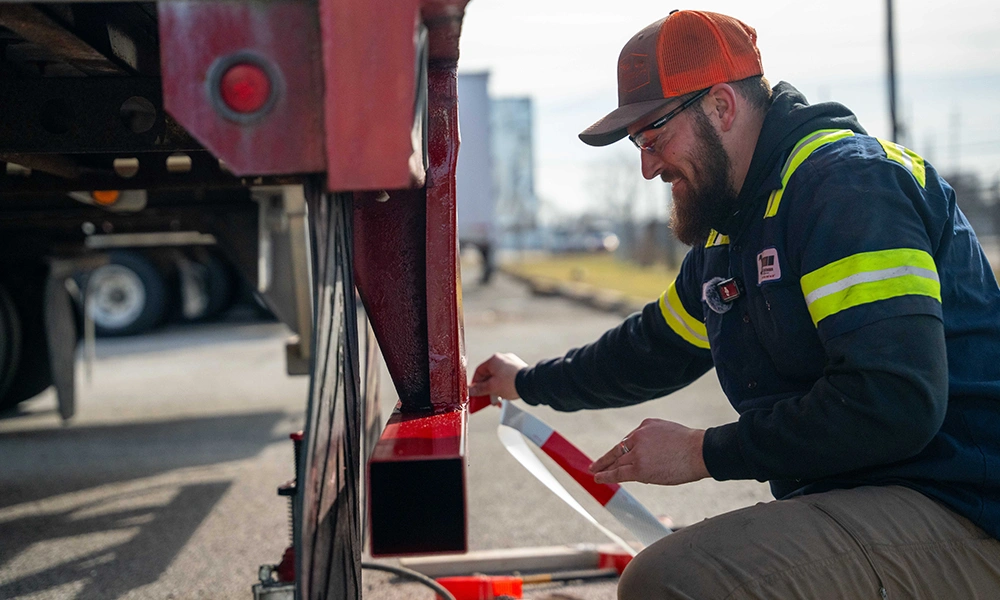
Fleet Manager Meaning and Definition
If you are looking for the meaning of fleet manager, consider them as the driver of a trucking band. A fleet specialist is a transportation specialist who manages and optimizes all the fleet operations of a transportation or logistics company. It is they who ensure that nothing goes wrong, starting with a truck leaving the yard and all the way back home.
The responsibilities and duties of a fleet manager go way beyond vehicle management. They are a psychologist, a mechanic, an accountant, and a traffic cop. A fleet manager may interview prospective drivers, buy a new truck, order maintenance services, and check on recent fuel expenses: all in a single day. That’s the reality of this job.
Fleet Management Duties in Daily Operations
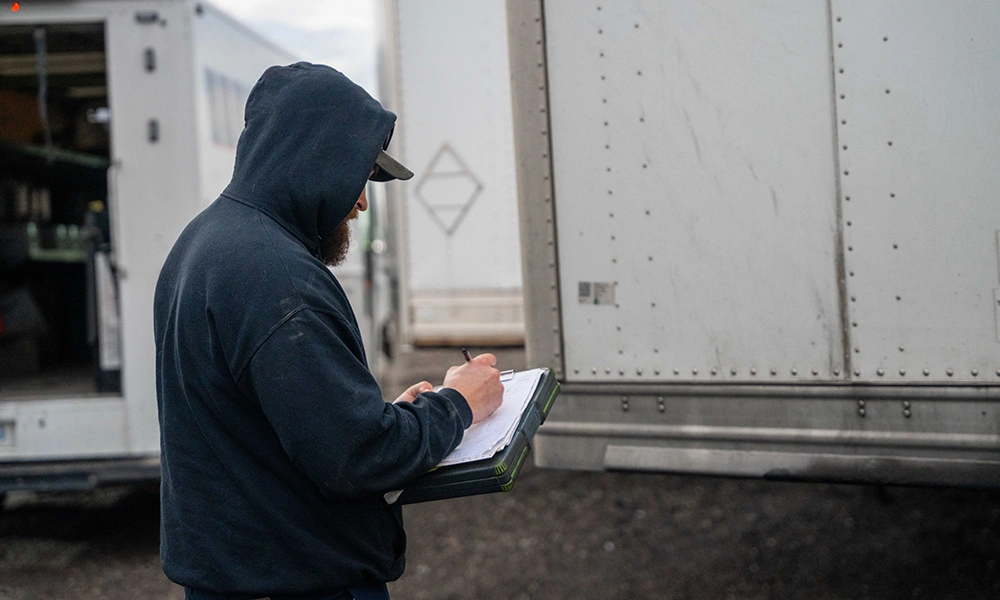
Let’s go through the day-to-day grind that fleet managers are subjected to. Each morning, they look at what trucks are on hand, what drivers are on call, and what loads must be transported. The fleet operations manager has control over the end-to-end life cycle of every company-owned commercial vehicle, and the life cycle is far more than you may imagine. They are liaising with dispatch, tracking driver hours to ensure they are DOT compliant, and making decisions in seconds that can either make or break a delivery. It’s what fleet management duties include.
The way a great fleet management specialist copes with unexpected situations, is one of the things that distinguishes them from other roles. Trucks fail, drivers fall ill, and customers decide at the last moment. A good fleet specialist always has a backup plan. He is aware of: the repair shops that provide quick and quality services, the drivers who will not disappoint in an emergency, and how to keep everyone updated without causing panic. Such planning aligns with strategies for reactive vs. proactive fleet maintenance.
Fleet Operations and Organizational Impact
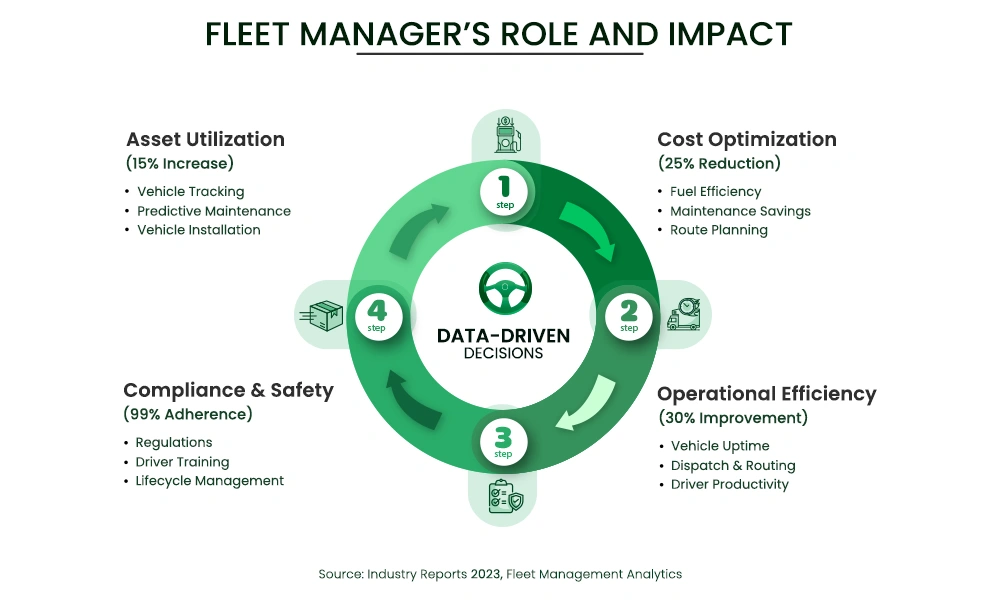
The fleet operations are the core of any trucking company, and the truck fleet manager or fleet director is the one who keeps things going smooth. The fleet managers have several responsibilities, such as optimization of routes, maintenance of vehicles, safety of drivers, and fuel management. Once these fleet operations are running smoothly, all are winners, customers receive their freight in time, drivers earn money, and the company remains competitive.
The role of a competent fleet specialist in the organization cannot be overestimated. There are companies that were in loss, but made profits just by introducing someone who understood how to optimize routes and maintain costs. An intelligent fleet operations manager devises methods of using every dollar and ensuring that safety remains the number one priority.
Fleet Specialist and Supporting Roles
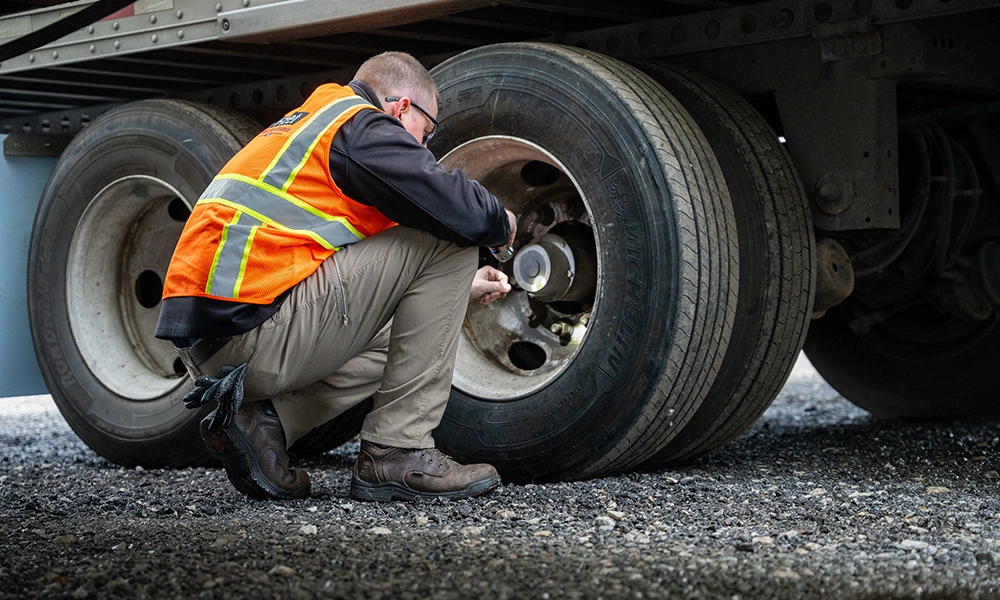
When it comes to fleet manager roles and responsibilities, not all companies can afford a full-time fleet director, particularly the small ones. That is where fleet specialists come in. They are usually individuals who have more than one hat on; perhaps they are doing fleet management part-time in addition to other roles.
The Fleet Manager handles and builds relationships with the drivers to enhance driver satisfaction and increase driver retention rate, and this relationship-building factor will be essential whether you are a full fleet manager or a specialist.
A fleet specialist can specialize in such fields as fleet inspections, compliance, maintenance scheduling, or driver relations. It is a big difference to have a person who is committed to these tasks, though not necessarily their sole employment. It is just a matter of ensuring that whoever is doing the fleet tasks knows the trucking business. You cannot control what you do not know, and the trucking industry has its own peculiarities that are not understood by outsiders.
Skills and Qualifications for Fleet Managers
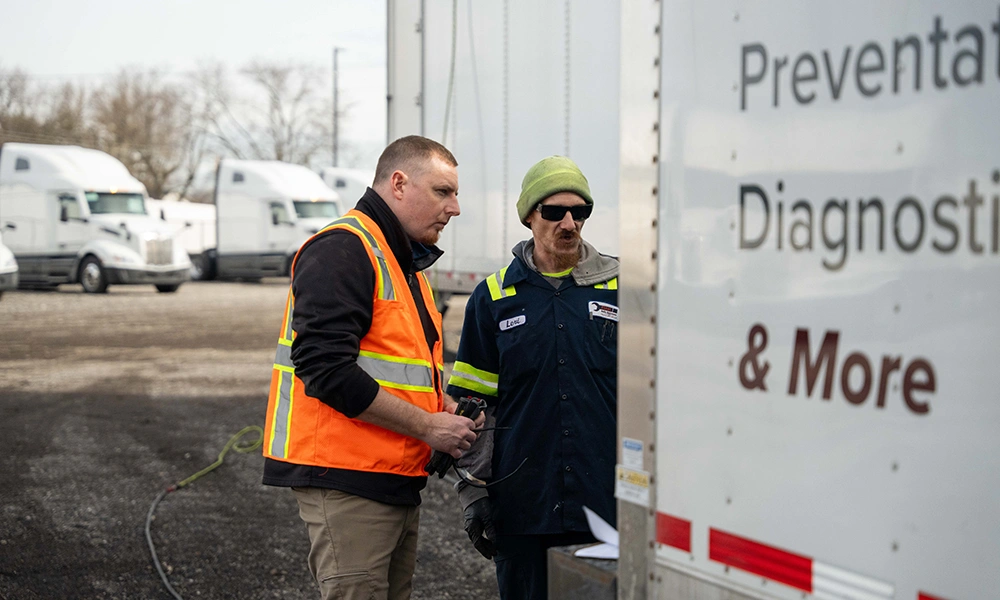
Whether you are considering joining a fleet management team or are an owner of a company interested in hiring one, you should know what skills are required to be a good fleet manager. Fleet managers are critical in the successful and effective management of fleets using their technical, analytical, and leadership capabilities. However, the most successful fleet managers are simply concerned about their drivers, and that’s what matters more than formal expertise.
Reports from late 2024 and early 2025 show average salaries in the range of $70,000 to over $100,000 per year.
You must also be an accountant and know how the fuel costs, maintenance expenses, and the wages of the drivers all combine. You must be a diplomat, resolving disputes among drivers, customers, and the management. And you certainly must organize – several trucks, drivers, and loads in action at the same time, it can be expensive to lose track of details. The fleet managers who survive in this business are those who are able to balance all these fleet manager roles and responsibilities, and at the same time treat their drivers as human beings rather than merely a resource.
Challenges Faced by Fleet Managers
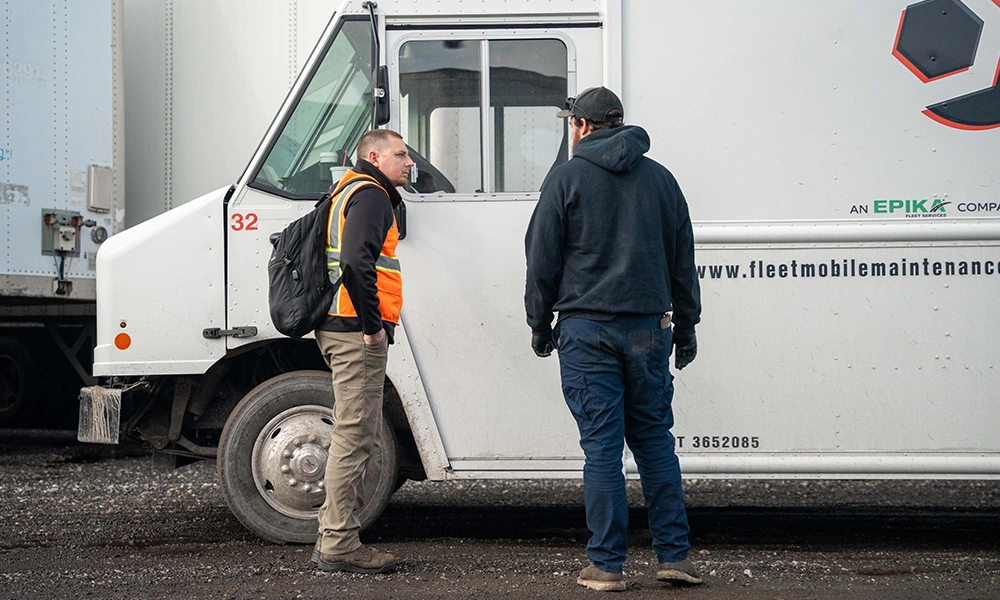
Being a truck fleet manager is not a simple task. Honestly speaking, their problems would turn the heads of most people. The United States experiences a shortage of drivers, and it is projected to have over 80,000 driver shortage by 2024. Industry analysts have estimated that the long-haul driver turnover rate is at 94% on average. That implies that fleet managers are continuously recruiting, training, and retaining good drivers, as well as struggling with the apprehension that most drivers will not stay long.
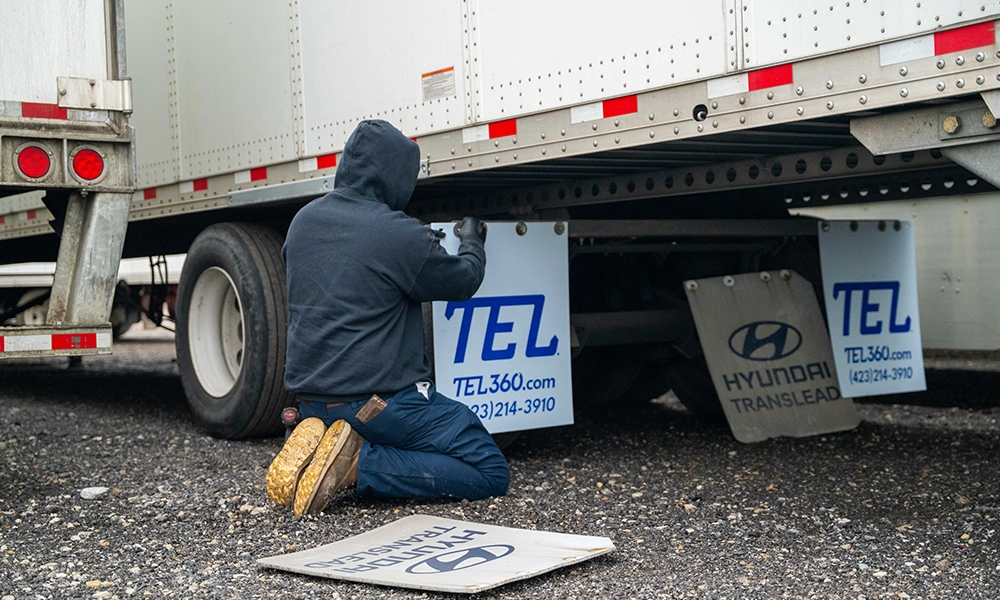
The regulatory issues make it even tougher for a fleet manager. Rules on hours of service, electronic logging equipment, drug and alcohol testing, etc. A single error may lead to the imposition of huge fines or even driver layoffs. Furthermore, there are equipment-related challenges; trucks are becoming more complicated and costly to maintain, and finding qualified mechanics is nearly as difficult as finding drivers.
Communication and Coordination with Drivers
A trucking operation can be or break depending on the relationship between a fleet specialist and their drivers. Research indicates that retention programs can reduce turnover by 30-60 percent and save fleets thousands of dollars that are spent on recruiting new drivers. The fleet managers who get this do not merely handle trucks; they handle people.
Good communication includes being accessible when the drivers require assistance. The most successful fleet managers ensure that they are there to assist and not to micromanage. They hear the grievances drivers face on routes, equipment problems, or pay matters, and they do something about it. Such assistance is the key to retaining experienced drivers.
Conclusion
Fleet managers play a critical role in keeping operations running smoothly. The most effective professionals in this role deliver consistent value by ensuring freight moves on time, trucks stay operational, and drivers remain supported. They are often the driving force behind efficiency, compliance, and day-to-day execution.
In an industry where driver wages account for a significant portion of operational costs and fuel prices continue to fluctuate, having a fleet manager who understands both the human and mechanical sides of trucking is essential. From managing drivers to coordinating maintenance and controlling expenses, their impact reaches every part of the operation.
FAQ’s
Is certification required to become a fleet manager?
Although no formal certification is required, most successful fleet managers are industry certified, such as NAFA Certified Automotive Fleet Manager (CAFM), or have experience in transportation, logistics, or automotive. Above all, it is a big difference to know the trucking business on the ground level.
How does fleet management software support fleet managers?
The modern fleet management software assists in tracking the maintenance of the vehicles, the hours of the drivers to comply with the DOT, the route optimization, and the cost of fuel. These tools provide a real-time visibility of their operations to fleet managers who can easily identify issues before turning them into costly disasters.
Is there a typical fleet size that requires a dedicated fleet director?
A majority of businesses that have 25 or more vehicles will have an individual assigned to the fleet management tasks. Smaller fleets may employ a fleet specialist who is responsible for several tasks, whereas larger fleet operations may require full-time fleet directors to deal with the complexity.
Can a fleet manager reduce operating costs for a company?
Absolutely. An effective fleet manager or vehicle fleet manager will be able to save money by using preventive maintenance schemes, fuel-saving plans, route optimization, and driver retention plans. Since the cost of operations is constantly increasing across the industry, a cost control person is a must to achieve profitability.