
IoT Fleet Management

As a logistics hustler, you understand that mileage, time, and money are everything. That is why IoT fleet management is turning the game around for the owners, fleet managers, and operations heads. IoT Fleet Management means using Internet of Things (IoT) technology, like sensors, GPS trackers, and connected devices, to monitor and manage vehicles, drivers, and assets in real time. Never again run around trying to find paperwork or guessing at breakdowns. IoT fleet management makes you the leader of the trends, saves money, and maximizes uptime.
The most amazing thing about IoT fleet management is the ability to use raw and real-time data and convert this data into actionable insights. Regardless of the number of trucks and the scale of operation, IoT fleet management solutions allow optimizing routes, tracking driver behaviour, and anticipating maintenance. This technology no longer remains the practice of the big guys; even the smaller fleets are embracing the idea of IoT in order to remain competitive, enhance compliance, and provide a high-level service. To ensure that your trucks are moving and your business is flourishing, it is high time to consider the capabilities of IoT fleet management.
How IoT Fleet Management Systems Work?
IoT fleet management systems are used by equipping the vehicle with connected devices, including sensors, GPS trackers, and telematic devices that gather information about the vehicle’s location and speed and monitor aspects such as engine condition and fuel usage. This data is transmitted via signals to a cloud system, which processes this data and then presents it to you in dashboards accessible via your phone, tablet, or office computer. And as a result, you can track all your trucks, trailers, and assets in real time.
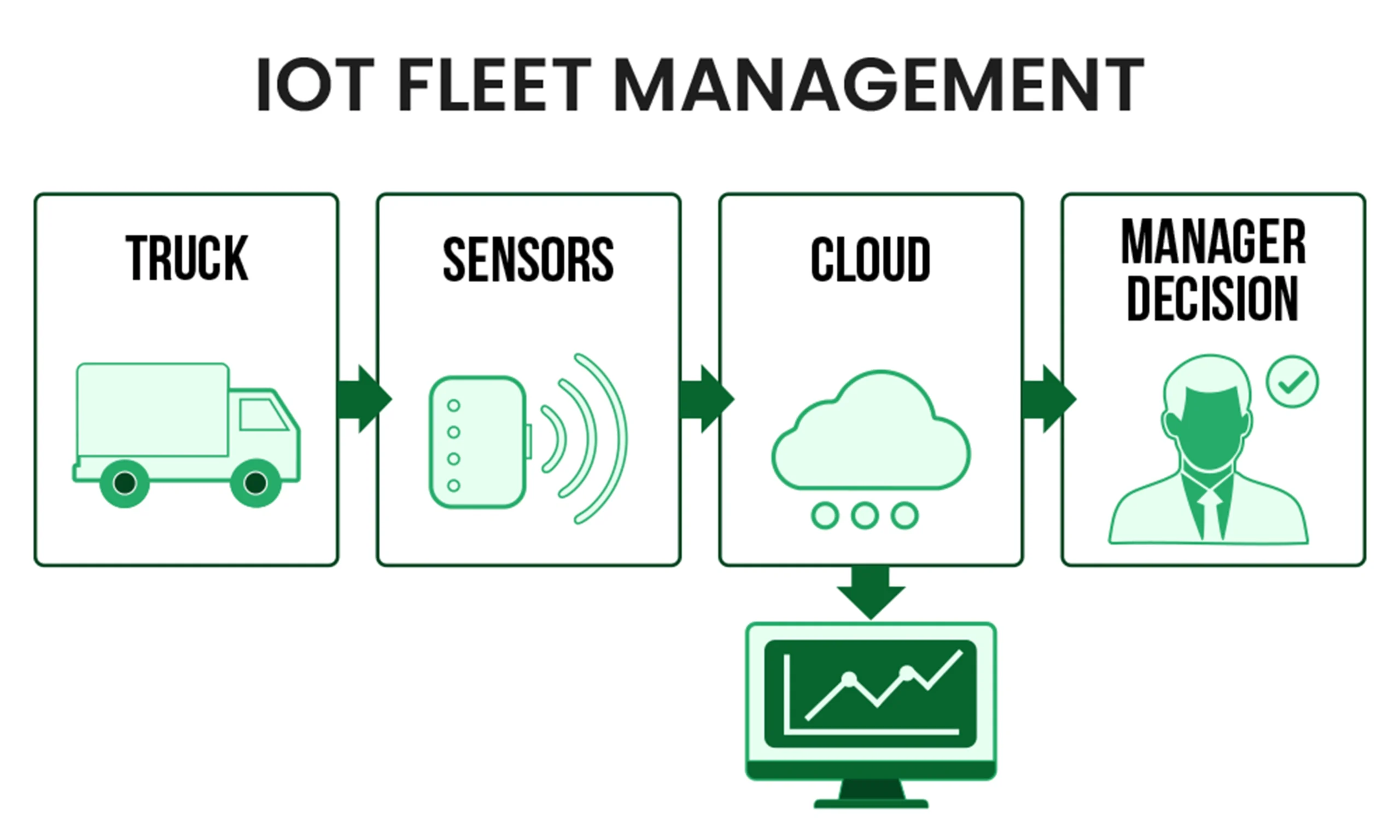
However, IoT fleet management is not merely about going through the dots on a map. Such systems use data to detect risky driving, forecast breakdowns, and propose the most effective routes to use despite traffic in real-time. Because your alerts and reports are automated, you end up wasting less time doing paperwork and creating more time to make decisions that advance your business. When you connect your IoT fleet management solutions to the TMS and/or the accounting software that you are already using, you will be able to streamline operations, minimize mistakes, and be on top of compliance, with less bureaucracy and more certainty.
Advantages of IoT in Fleet Management Systems
IoT fleet management is a game-changer for the present-day logistics hustlers. Fleet managers can be put in a position to access the real-time data that can guide smarter fleet management by connecting vehicles, drivers, and assets collectively via smart sensors and cloud platforms. The IoT fleet management solutions also allow you to track vehicles, surveillance the driver’s behaviour, and make calls for maintenance, all at the same time, optimising the routes and minimising the paperwork. Additionally, IoT integration with dispatch and accounting systems reduces manual admin time by 11+ hours per week on average (FMCSA). All these advantages of fleet management IoT make it an absolute necessity in terms of keeping up with the closest rivals, reducing expenses, and providing customers with improved service.
 Real-Time Tracking
 Real-Time Tracking
IoT fleet tracking will help to deliver up-to-date data about the location of vehicles, the route, and the completion of a delivery. With this visibility, you will be able to reroute traffic, respond to emergencies, and be able to inform your customers with accurate ETAs.
Predictive Maintenance
 Predictive Maintenance
IoT fleet management solutions include sensors that detect the workings of critical parts of a vehicle and notify you about a possible issue in advance, prompting you to resolve the problem before it leads to a breakdown.
Driver Behaviour Monitoring
 Driver Behaviour Monitoring
According to the FMCSA, unsafe driving contributes to 87% of the preventable accidents. IoT in fleet management monitors bad and good driver behaviours by giving real-time warnings about hard braking and speeding, and reduces those risks. This way, you have the chance to give specified coaching, enhance safety, and also cut costs on the most common fleet accidents.
Fuel Management
 Fuel Management
IoT fleet management solutions provide an analysis of fuel consumption, identify anomalies, and make recommendations regarding route optimization. This assists in improving fleet fuel efficiency by up to 10% and avoiding fuel theft.
Compliance and Reporting
 Compliance and Reporting
Digital ELD (Electronic logging device to help record a driver’s hours of service) and DVIR (Inspection report that drivers complete before and after the trip) systems help fleets avoid up to $13,260 per violation, per FMCSA’s 2024 civil penalty schedule. Automatic data gathering of IoT fleet management systems also facilitates observance of rules and regulations such as ELD mandates and inspections. Paperwork is minimized, and fines are evaded by digital logs and reports.
Potential Risks of Using IoT for Fleet Management
Although IoT fleet management is reshaping how logistics hustlers manage their businesses, it is not a paradise rather full of challenges. Since increasing fleets choose to implement IoT fleet management solutions in order to improve efficiency and reduce costs, new threats appear that all owner-operators and fleet managers need to be aware of. Cybersecurity is one of the most serious issues, as IoT in fleet management utilizes connected devices and cloud services, and such sensitive information as vehicle locations and routing, driver details, and other data may be stolen or hacked. A breach would not only take away the operations or delivery schedule but also endanger the driver. The headaches of integration, the volume of data, and the ever-changing compliance requirements make the entire situation even more complicated, and it is vital to select secure and supportable IoT fleet management solutions and invest in continuous training of the workforce.
Data Security
 Data Security
The problem is that IoT fleet management systems can be hacked, and the information on routes, drivers, and cargo can be stolen. It is essential to invest in effective cybersecurity.
Integration Complexity
 Integration Complexity
It may be challenging to connect new IoT devices with the existing fleet management systems, namely when it comes to different vendors and protocols. Gradual integration would help with smooth running.
Regulatory Compliance
 Regulatory Compliance
IoT for fleet management should also meet high standards of data confidentiality, emissions, and driving time. Violations lead to huge penalties and a tarnished image.
Data Overload
 Data Overload
So many data points are being pumped out of IoT fleet monitoring devices that one can be left in the noise. Data filtering and analytics must be done to make the data provide meaningful results.
Workforce Training
 Workforce Training
When embracing the use of IoT fleet management solutions, people need to shift their perception and acquire new methods and tools. Training guarantees that all staff members will be able to apply the technology in the best way and provide the maximum returns.
Core Components of an IoT Fleet Management Solution
Knowing what is IoT fleet management implies being aware of the major components that make this whole thing work. A good IoT fleet management solution includes the hardware, software, and connection so that you get a real-time view of what is happening on the road and coordinate your multi-modal fleet on one platform. Fundamentally based on telematics hardware and GPS trackers, IoT fleet management is an application that collects data related to the location of the vehicle, engine condition, and driving habits of the driver of these vehicles. This information is transferred securely through cell phone or satellite technology to the cloud, where it is processed and analyzed. Managers then utilize easy-to-understand dashboards and mobile applications to track performance, maintenance schedules, and optimal routes. Such elements cooperate to convert any raw data into usable insights to facilitate cost reduction and increase efficiency in fleets. To learn more about keeping your fleet in top condition, explore our truck preventive maintenance guide.
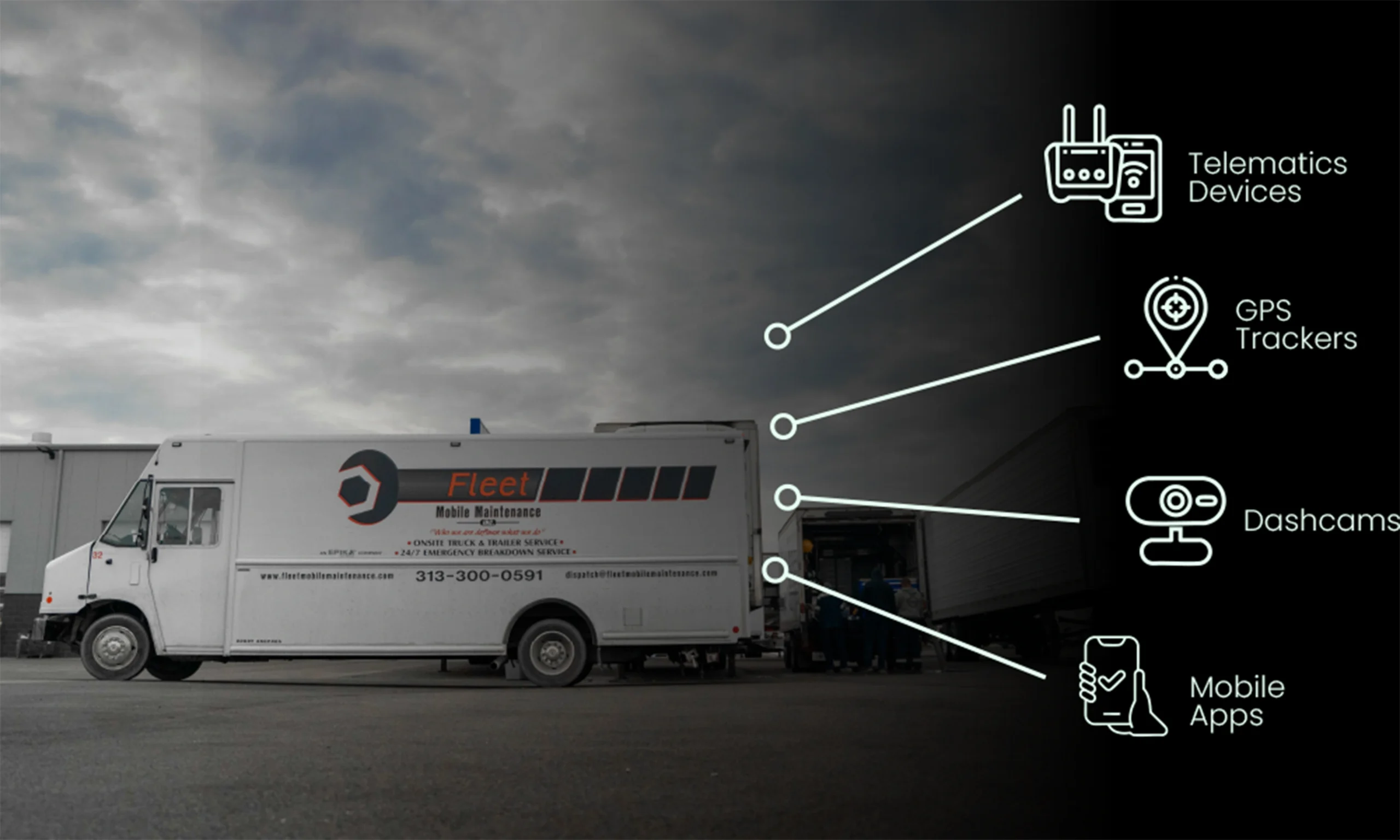
1. Telematics Devices
Telematics devices collect data related to speed, braking, engine condition, and much more. Then these devices provide this valuable information to your IoT fleet management systems to make wiser decisions. This is a key part of what fleet telematics is all about.
2. GPS Trackers
With GPS trackers, it is possible to track an IoT fleet accurately and see the location of your vehicles, plan the most effective routes, and address delays or emergencies promptly. all while benefiting from the many advantages of GPS vehicle tracking.
3. Dashcams
IoT fleet management systems have dashcams that record driving conditions and circumstances that facilitate safety measures and help in case of disputes.
4. Mobile Apps
The mobile applications link drivers and managers to enable them to communicate instantly, view schedules, and have real-time updates over the IoT fleet management solution, you have implemented.
5. Cloud Platforms
The platforms are cloud-based and bring all the data of all IoT devices to a focus point, providing dashboards, analytics, and automatic alerts to simplify fleet operations.
Practical Tips for Using IoT Solutions for Fleet Management
The best way to get the most out of IoT fleet management is to be goal-oriented and follow a realistic plan. The first thing to do is to analyse all your IoT devices and learn what data they gather. Combine this data into a centralized system to have all the information about your fleet. Conduct analysis regularly on the information to reveal trends and areas for improvement. Ensure that your team is aligned and empowered by training them to use the IoT fleet management solutions effectively. Turn your IoT investments into opportunities by keeping in touch with the changing technology and constant reviews from your vendors. To have on-ground support, you can think of mobile fleet maintenance services to ensure the smooth running of your fleet.
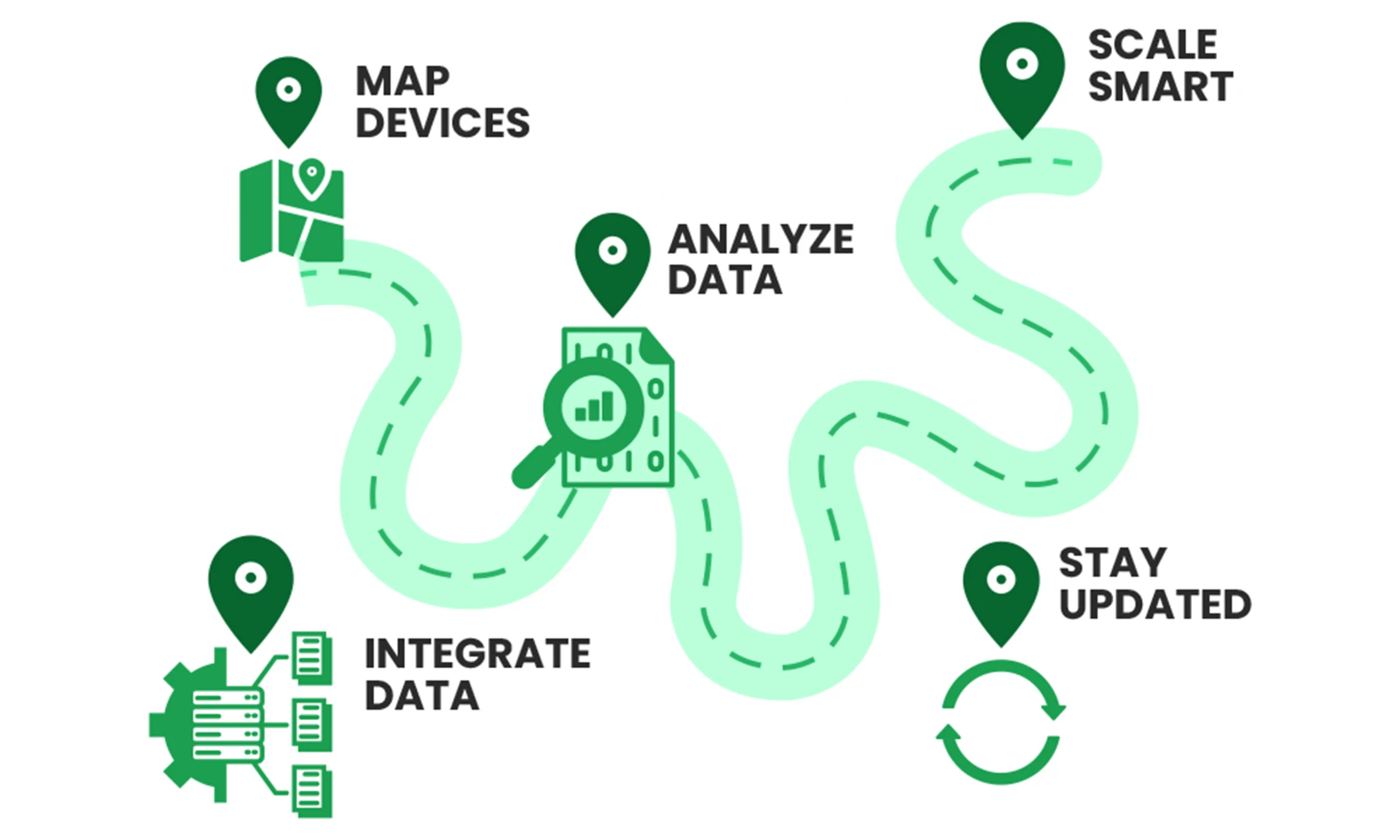
1. Map Out Your Devices
Determine what vehicles and assets are good to be managed with IoT fleet management and strategically distribute devices to get the best ROI.
2. Integrate Data Sources
Integrate IoT fleet management data with your current systems in order to automate work processes and remove the possibility of manual data transfer.
3. Analyze Data Regularly
Schedule some time to analyse data gathered by IoT fleet monitoring systems with an eye to seeking out trends and ways to increase efficiency and save money.
4. Train Your Team
You should invest in training respective people, such as drivers, dispatchers, etc, and make sure that all of them know how to operate IoT fleet management solutions.
5. Stay Updated
Keep your IoT fleet management software and devices up to date with patch vulnerabilities and get access to new features.
6. Start Small, Scale Smart
However, you can do this by starting a pilot program, collecting feedback, improving your strategy, and then carrying out your IoT solutions for fleet management to maximize efficiency, reduce operational costs, and ensure a smoother, more scalable rollout across your entire fleet.
Real-World IoT Fleet Management Use Cases
The effects of the IoT fleet management on real-life operations cannot be ignored. Fleets across industries are getting the benefit of the IoT to increase their efficiencies, cut back expenses, and better their safety. These technologies are revolutionizing logistics with real-time IoT fleet tracking that lets the management know where the vehicle is, and predictive maintenance that avoids expensive breakdowns. Fleet management IoT allows companies to track driving habits, complete fuel usage optimisation, and verify regulatory adherence. IoT solutions for fleet management present tangible measurements and consist of shifting when it comes to the management of perishable goods based on sensor data or the automation of route choices. An examination of these IoT fleet management use cases displays the extent to which connected fleets remain competitive and receptive in the current dynamic market.
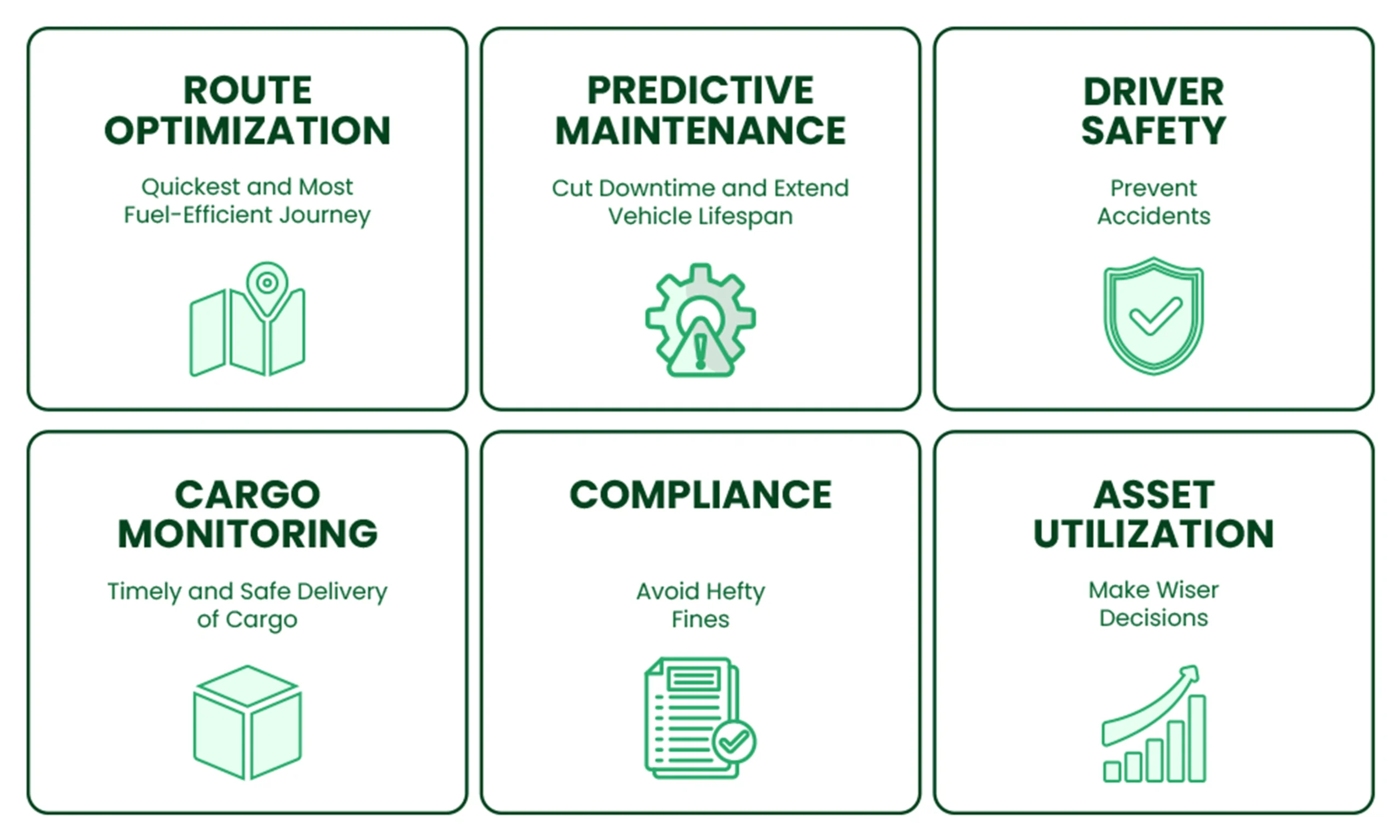
1. Route Optimization
The IoT fleet management solutions show real-time data to propose the most economical route to maintain the quickest and most fuel-efficient journey and allow you to minimize the cost of on-time deliveries.
2. Predictive Maintenance
By using IoT in the fleet management process, the health of vehicles can be checked, and problems can be foreseen before they lead to a malfunction. According to OXMAINT, it cuts downtime by 25% and extends vehicle lifespan by 2 years on average.
3. Driver Safety
The IoT fleet management helps to monitor speeding, slamming on the brakes, and fatigue to achieve safer driving and prevent accidents.
4. Cargo Monitoring
IoT Fleet management solutions note the condition of the cargo and make sure that sensitive cargoes or those requiring a lot of financial input stay safe and viable on their delivery date.
5. Regulatory Compliance
Automatic data compilation and reporting keep fleets within the regulations, cutting back on paperwork and, safe from more serious and expensive violations.
6. Asset Utilization
The thing that IoT fleet management monitors is the frequency of use of assets, enabling you to make wiser choices regarding the number of fleets and where to place them.
The Future of IoT Fleet Management Solutions
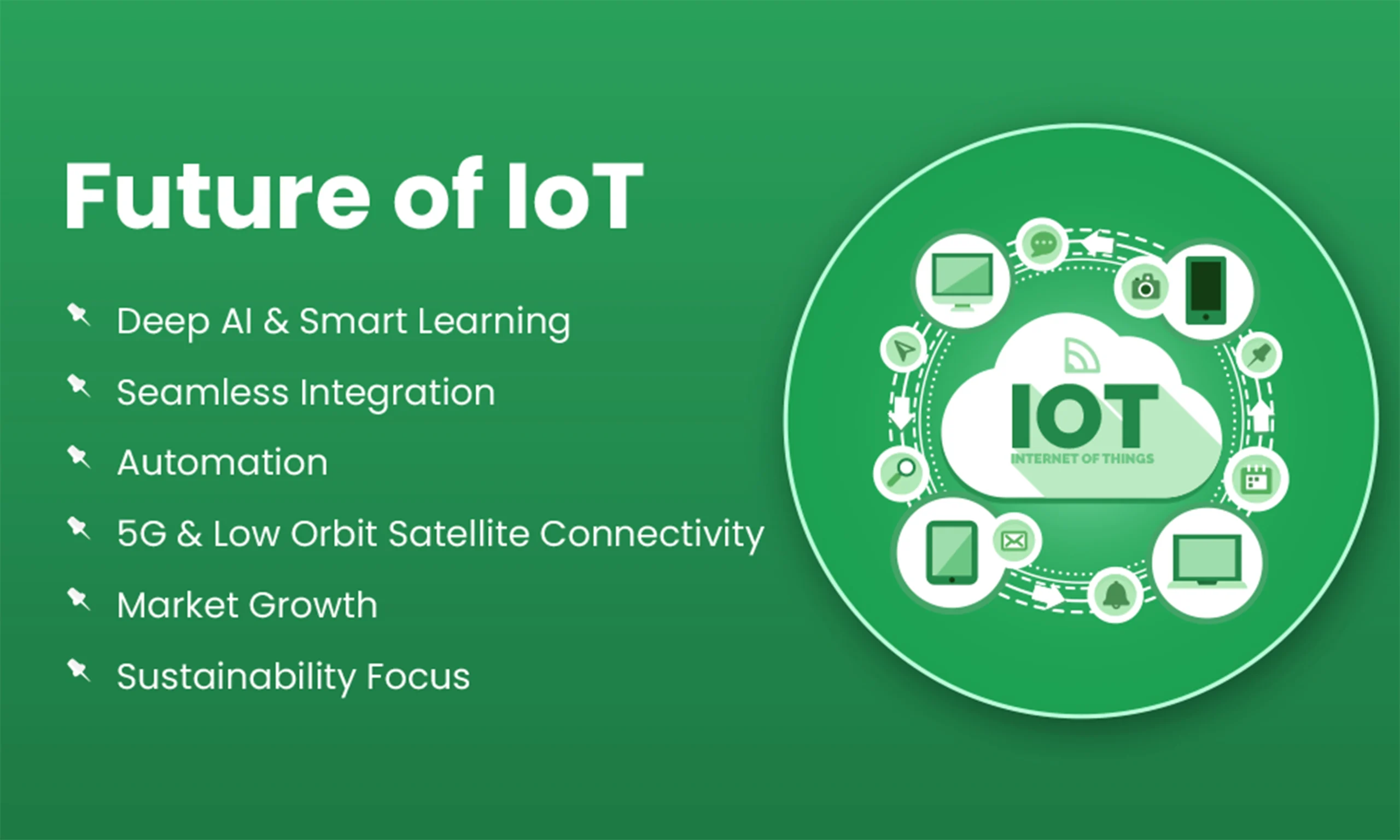
IoT fleet management solutions hold a lot of hope for the road ahead. With the evolution of technology, more powerful technologies will be coming online to ensure you with an even leaner and smarter as well as more profitable fleet. Deep AI and smart learning will comprehend the high volumes of data, provide the predictive information that puts you on top in regard to breakdowns, compliance, and customer requirements.
The integration will become even more seamless, as IoT fleet management solutions would be able to work harmoniously with your TMS, accounting, and dispatch systems. The future will be more automated, think self-setting scheduling maintenance, automatic rerouting, and immediate compliance reporting. With 5G and Low Orbit Satellite connectivity, your IoT fleet management solution will allow you to share real-time information even in the most distant areas, making sure that your operation can stay fast and prepared.
According to Allied Market Research, the IoT fleet management market is projected to grow at nearly 10% CAGR, reaching $16 billion by 2031.
There is also sustainability on the horizon. IoT fleet management solutions will assist fleets in lowering emissions, streamlining fuel consumption, and going green. Regardless of your concerns about either weight reduction strategies or autonomous fleet management, IoT is bound to have a central position in constructing a more efficient, climate-friendly future. Want to see how these innovations are shaping the future of logistics? Check out our latest insights on Fleet Management Trends.
Conclusion
IoT fleet management is no longer optional; it is something that can take the fleet to the next level. Linking your vehicles, drivers, and assets together will help you derive the visibility and control you need to reduce costs, ensure greater safety, and provide best-in-class service. Practically speaking, it does not matter whether you run a small line of trucks or your brand stretches nationwide; IoT fleet management solutions are the secret to making it in the modern logistics industry.
Are you set to kickstart your fleet to the next plane? Talk to the experts at Epika Fleet and get information and professional advice on cutting fleet management costs. Do not be left ranking in the dust, adopt IoT fleet management and sail your business to success without fear.
FAQs
What is the difference between telematics and IoT?
Telematics is concerned with gathering and relaying vehicle information, such as location and speeds, primarily to track and confirm. IoT, in its turn, links several devices such as sensors, cameras, etc, therefore allowing advanced analytics, automation, and real-time decisions to be made in fleet management.
What is smart fleet management?
The advanced analytics, telematics, and IoT are employed in smart fleet management. It automates such things as routing, maintenance, and compliance and provides managers with real-time information on how to make better efficiency, safety, and customer-service decisions. It is about having your fleet work faster and smarter, not harder.
How is AI used in fleet management?
Fleet management AI uses data obtained by IoT devices to forecast the time of maintenance, the optimal routing, and warn against dangerous driving. It also schedules automatically, is more fuel-efficient, and enables the managers to make data-oriented decisions, which saves costs and enhances overall performance.