
What is Payload Capacity?

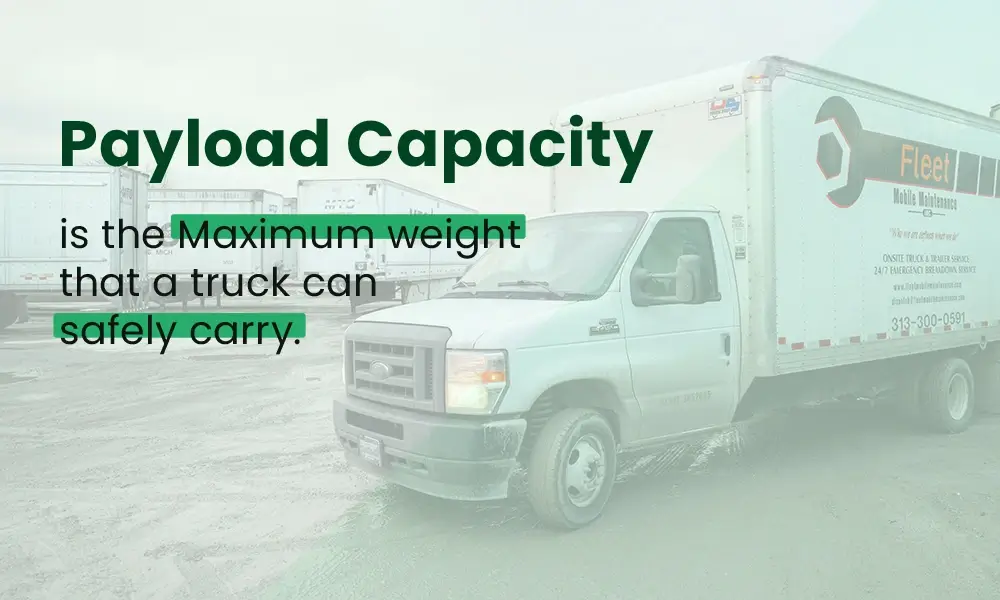
What is payload capacity? Let us just talk about that. It is the heaviest weight that a truck can carry without getting damaged or causing any accidents. For example, the weights of the passengers, cargo, and equipment are placed in the truck. The payload capacity meaning assists you in ensuring that you do not load your trucks beyond their limit, as this not only endangers the safety of the vehicles, increases braking distances and loss of control, but also deteriorates the maintenance of the trucks and exposes them to various legal liabilities. Being aware of “what’s payload capacity” will not only ensure your vehicle performs up to the mark, but also remains fuel efficient and roadworthy over a long period of time.
By understanding “what’s payload capacity”, you are able to differentiate it from other terminologies, which usually create confusion. Proper knowledge of each terminology is used by efficient fleet operators to ensure that their trucks are safeguarded, routes are optimised, safety is improved, and their fleet is running efficiently. Do not allow heavy work to bring your business down; invest in understanding, preventive healing, and adopt the appropriate care today.
What is Towing Capacity?
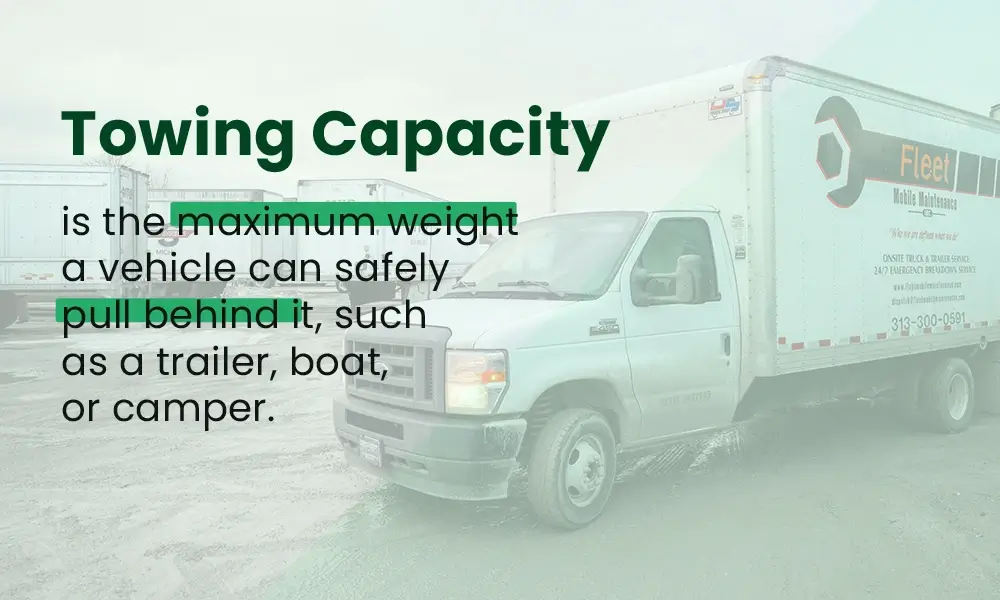
Towing capacity is the weight of the heaviest loads that your vehicle can safely pull behind it, and this section is measured in terms of cargo or equipment loaded on trailers you can pull behind. The automobile manufacturer determines this figure depending on aspects such as the engine power, transmission, brakes, and strength of the frame.
In order to maintain optimal performance of your trucks as well as make them last longer, it is essential that you balance loads both in terms of payload capacity as well as towing capacity. Overloading your truck can cause tension on the engine, transmission, brakes, and suspension, and to remove this stress, the fleet management costs would further increase.
In order to work safer and smarter, consider the maximum weight you can have on your truck, and consider the weight you can pull when planning the routes and loads. For practical tips, consider exploring weight reduction strategies. Know your truck’s limits, and protect your bottom line.

Difference between Payload and Towing Capacity
“What is payload capacity?” is not the end of the story. To a fleet manager, owner, or operator aiming at maximizing truck performance, the other important thing to know next is the difference between payload and towing capacity.
Payload capacity is the maximum weight that can be carried in your truck or on the truck, including the passengers, cargo and equipment. On the other hand, towing capacity is the weight that your truck can tow in the rear, such as trailers or anything that might add weight. Towing capacity vs payload are two different but equally influential aspects, and their individual outcomes determine the safety of a vehicle. Remember that both assist you in preventing costly damages and staying compliant during the DOT inspections.
Many in the trucking industry highlight how mixing up payload on a truck and towing limits can cause operational headaches. Combining knowledge of payload vs towing capacity with expert fleet maintenance services provided by Epika Fleet is a proven strategy to save time and money for fleets seeking to enhance efficiency.
How to Calculate Payload Capacity?
For any fleet owner or operator wondering what is payload capacity, the calculation is simpler than you might think. To calculate your payload, you need to start by identifying two key numbers: your truck’s Gross Vehicle Weight Rating (GVWR), which is the maximum total weight your vehicle can safely handle, and the curb weight, which is the truck’s weight when empty but ready to drive, including fuel and standard equipment. The formula is straightforward:

For example, assume that your truck has a GVWR of 10,000 pounds and an empty or curb weight of 7,000 pounds, then you can carry 3,000 pounds in it. This implies that you can safely have 3,000 pounds of cargo and passengers without exceeding limits. Understanding “what is a payload capacity” will safeguard your fleet against overloading, which may result in a failed DOT inspection.
But if you are towing your trailer, the calculation isn’t this simple. The trailer’s tongue weight (the downward pressure the trailer hitch exerts on your truck) also counts toward your payload. So, when towing, the formula becomes:

Let’s say you have a 3,000-pound payload capacity truck, and you add a trailer that weighs 200 pounds on the tongue; now the new load carrying capacity becomes 2,800 pounds. This is an important limitation to consider because repeated overloading can cause premature wear on everything from the tires to the suspension components.
What Does Max Payload Mean?
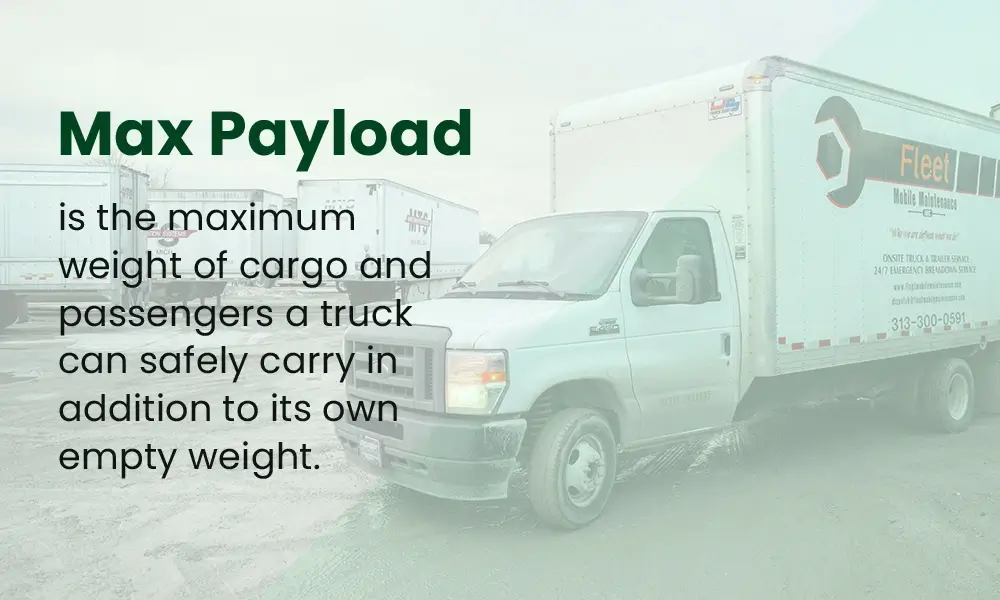
If you’re interested in the max payload meaning, then it is the full weight that a vehicle, such as a truck, can possibly be loaded without breaching its design limits. All this is accounted for: cargo, passengers, fuel, and installed equipment. Understanding “what is payload capacity” is essential, as it also covers the max payload, meaning, which highlights the critical threshold you must never exceed to avoid damaging your truck or risking safety. Exceeding max payload can lead to costly repairs and poor handling. Knowing this limit helps fleet managers balance loads efficiently and maintain optimal fleet fuel efficiency.
Why Payload Capacity Matters?
Knowing the payload capacity’s meaning as an owner, fleet manager, and operations manager will allow you to load trucks without compromising their safety due to the possibility of damage and unproductivity. These eight are some of the most significant reasons why the payload capacity is so important to your business:
1.  Safety on the Road
 Safety on the Road
Never exceeding the payload capacity of the vehicle jeopardizes vehicle stability, control, and stopping. Trucks with a load that is beyond their capacity tend to roll over, thus causing damage to drivers and other road users. It is of great importance to follow the payload limits as it helps to avoid accidents and guarantee the safety of all people.
2. Protects Vehicle Components
 Protects Vehicle Components
Brake, tires, suspension, and the engine are strained by heavy loads. Regular overloading of the max payload leads to premature wear and mechanical failures, thereby increasing fleet management costs as well as reducing uptime.
3. Legal Compliance
 Legal Compliance
Government controls the weight of cars in order to safeguard roads and safety. Disregarding payload capacity may result in heavy penalties, fines, and even impoundment of vehicles under the DOT audit exercises. Being legal will save your reputation and the capability of your fleet to serve.
4.Enhanced Fuel Efficiency
 Enhanced Fuel Efficiency
Trucks overloaded beyond payload limits consume more fuel. Properly managing payload vs towing capacity helps reduce fuel consumption, lowering operational costs and improving environmental footprint.
5. Maintains Cargo Integrity
 Maintains Cargo Integrity
An overloaded or uneven payload risks cargo shifting or damage. Knowing what is payload weight, allows for secure loading that protects goods and builds customer trust.
6. Improved Driver Performance
 Improved Driver Performance
Surpassing weight limits makes trucks harder to control and risky to drive. The appropriate weight of payload will aid in conducting missions with the right handling, less fatigue amongst the drivers, and accomplished missions.
7. Maximizes Vehicle Longevity
 Maximizes Vehicle Longevity
Operation of trucks within their payload capacity also ensures that they are not worn out prematurely and warranties remain intact, hence they will have value in the long run and minimize repair costs through smart truck preventive maintenance.
8. Optimizes Load Planning
 Optimizes Load Planning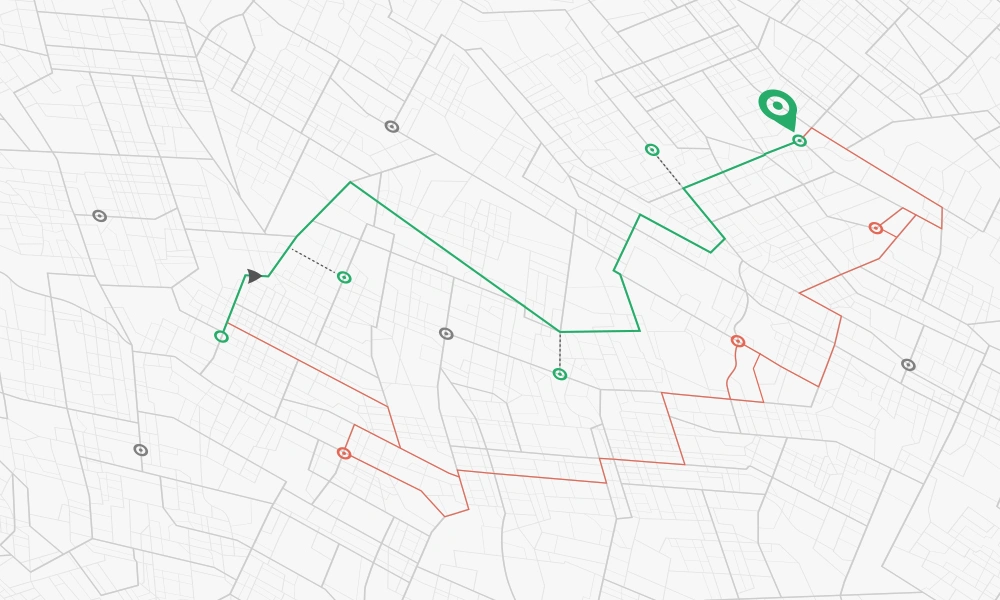
How Route Optimization Helps You Use Payload Capacity Efficiently
Knowing “what is payload capacity” is important, but it is essential to use the capacity wisely. Route optimization minimizes empty miles as well as idling. This has a direct effect of enhancing load utilization, fuel, and labour charges. With the help of powerful route planning software, one will consider current traffic, delivery windows, and vehicle limits, and your payload will serve you better. It can also prevent overloaded trucks due to the improved load distribution between the available truck strengths and safeguard the company’s resources, as well as meet the safety requirements.
What Does Payload Capacity Mean? Track It Easily with Epika Fleet
For fleet managers, owners, and operators who do not want to spend money on expensive repairs, it is important to understand “what does payload mean on a truck” and how to avoid its consequences. Tracking payload capacity can seem complex, but with modern service providers like Epika Fleet, monitoring payload capacity in real time is easier. We help you stay within payload limits and keep your trucks running efficiently.
Conclusion
The concept of payload capacity is crucial knowledge to every fleet operator and driver who wants to maintain a safe, effective, and efficient fleet operation. Understanding “what is payload capacity” ensures the prevention of excess loading, less cost of repair due to increased life span of the vehicles, adherence to legislation during DOT compliance checks, and improvement in the performance of the fleet. Proper load execution safeguards your profit and assures the drivers of safe travels.

By understanding “what is payload capacity” and the crucial difference between payload and towing capacity, you can optimize loads, reduce fleet management cost, and improve fleet fuel efficiency. For comprehensive support, explore Epika Fleet’s mobile fleet maintenance services and leverage expert truck preventive maintenance to maximize your fleet’s potential.
FAQs
What is the meaning of payload capacity?
Payload capacity definition is the total weight that can be fully supported in vehicles like trucks and transport goods either on board or in the cabin, together with the workmen. It is computed by taking the curb weight of the truck and the difference between its Gross Vehicle Weight Rating (GVWR). Being aware of what is payload capacity will aid in avoiding overloading, carry out safer operations, and lower maintenance expenditures.
What’s the difference between maximum payload and towing capacity?
Maximum payload is the amount your vehicle can carry board cargo and people. Towing is the capability that your car has to carry behind it; it includes trailers. The appropriate meaning of the difference between towing capacity and payload avoids unsafe loads and expensive services.
Does hitch weight count as payload?
Yes, tongue weight or hitch weight is a part of the payload. It increases the load in the truck since it applies pressure on the hitch receiver. When adding the weight of the items, thus carrying a payload, never forget to add the hitch weight, lest you end up being over the allowed payload.
What is the maximum payload without a CDL?
The maximum payload without requiring a Commercial Driver’s License (CDL) generally depends on the vehicle’s GVWR, often set under 26,001 pounds. However, exact limits vary by state. Understanding what is payload capacity is and staying within legal limits helps avoid compliance issues during DOT inspections.