
Complete Guide to Truck GPS and Navigation for Drivers


Locating a proper truck GPS can make the day of a driver or break it. When owners, operators, and fleet managers have tight timetables and must meet mandates, a dependable trucker GPS is required to keep them on track to prevent expensive delays. With the current use of truck GPS navigation systems, there are now customized routes based on the size of the truck, weight limits, and road restrictions, which help to increase efficiency with each run. These systems have specialized GPS for semi trucks options, which deal with the special routing of the larger rigs. You can get highway-friendly and detour or real time alert of highway and weather, it all depends on the kind of trucker GPS you select to make sure your trips are safe and smooth, and your trucks are rolling, and that your customers are pleased.
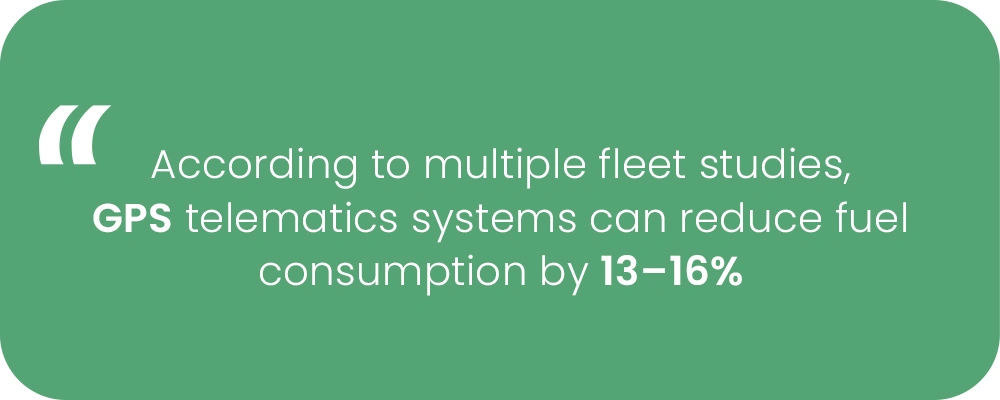
Numerous studies and industry data show that fleet owners who recently switched to one of the highest-rated truck driving GPS devices, saved on fuel in the first few days and spent less time in a traffic jam, attributed to the precision and route knowledgeability of the device for the truck. Moreover, integrating a GPS for trucks into dispatch operations dramatically improved on-time delivery rates.
-Google facts
Drivers and managers who need to upgrade their tech should consider researching the specifics of truck GPS reviews to make sure the technology fits their individual needs. Besides, to get even more opportunities to use vehicle data, we recommend reading about our ideas on GPS vehicle tracking.
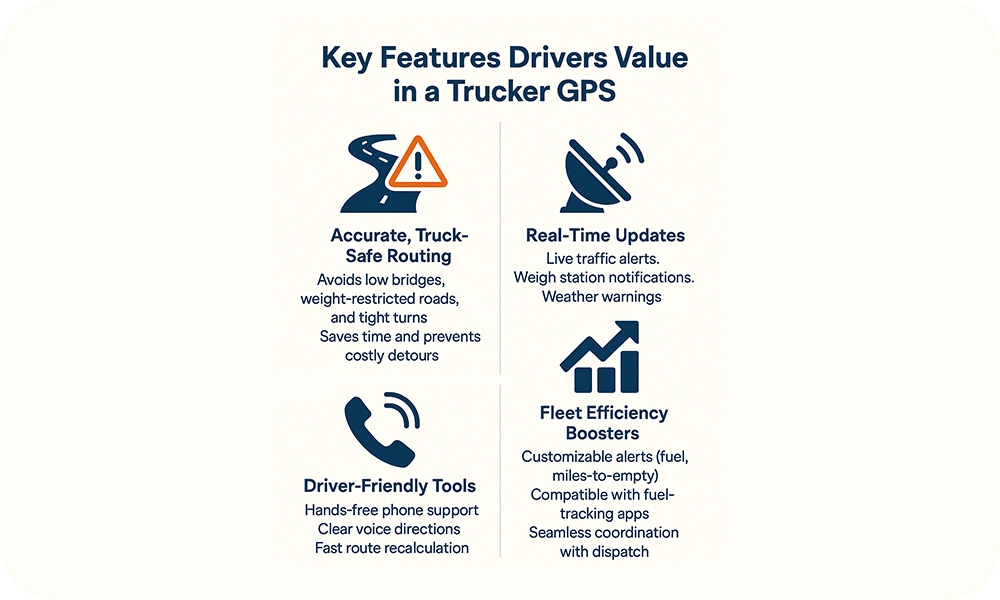
Key Features: Drivers’ Value in a Trucker GPS
Logistic hustlers are able to achieve more on-time deliveries and fewer detours, and make their business easier and less stressful since they started using the truck GPS navigation device that has truck profile settings.
-Supported by industry information and driver experiences (Google)
The best trucker GPS should have real-time traffic information, weigh station alerts, and commercial vehicle-friendly compliance routing. During long hauls, reliability is of great importance; drivers would prefer systems that keep them connected and updated as fast as possible. In case one is interested in wider fleet tracking systems, the truck GPS can be combined with GPS vehicle tracking systems to maximize benefits and have more control without introducing any complexity. In addition to navigation, top truck GPS systems provide hands-free phone support, voice directions, and recalculation of the route in a short time, depending on the rig.
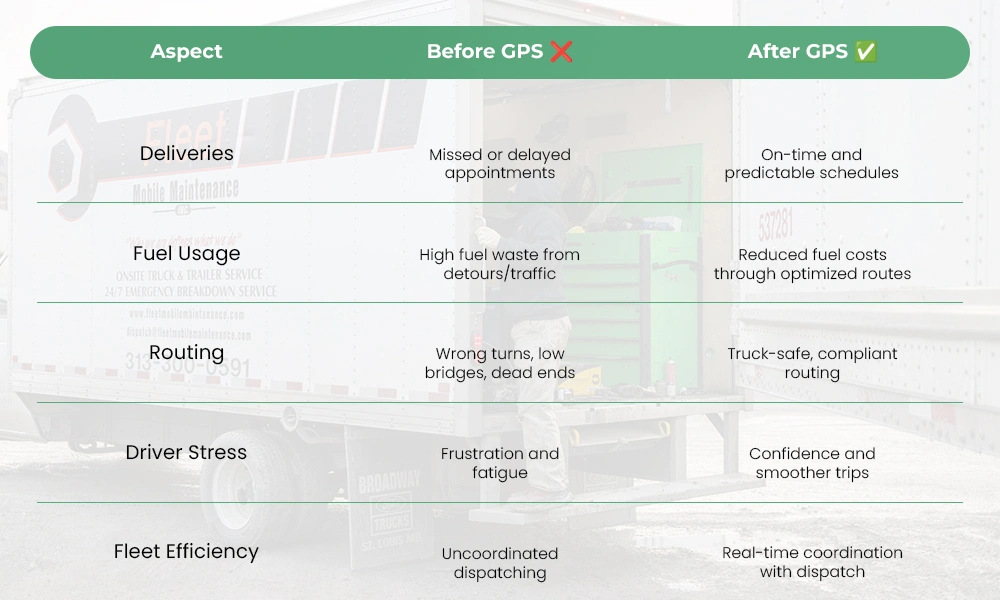
Benefits of GPS for Truck Drivers on the Road
A good truck GPS will revolutionize truck drivers’ dealings with long-haul routes and compact timetables. This technology isn’t just a convenience; it directly impacts fuel efficiency and compliance, two critical pain points for any trucking operation. Adopting a GPS for trucks, along with links to back-office tools, will lead to a clear dispatch-to-delivery system.
Common Truck Navigation Issues and GPS Solutions
Issues that the truck driver is likely to face include poor routing, missed turns, and unforeseen road blockages, which cause a loss of time and an increase in fuel consumption. A properly developed truck GPS will defeat these problems as it can offer truck-specific directions through the size of the vehicle and the kind of cargo. Truthfully, by investing in a commercial truck GPS that routinely updates its information base, it is possible to avert costly detours and fines, and make sure that drivers take only the legal and safe routes each time.

There are also glitches on the device and connection issues with truck navigation. Ultimate truck GPS navigation systems possess efficient GPS positioning, fast replenishment facilities, and user interfaces that meet trucking challenges. Many trucking fleets are currently using GPS vehicle tracking technology to keep their dispatchers in touch with their drivers in real-time, enhancing communication and optimizing the overall performance of the fleet.
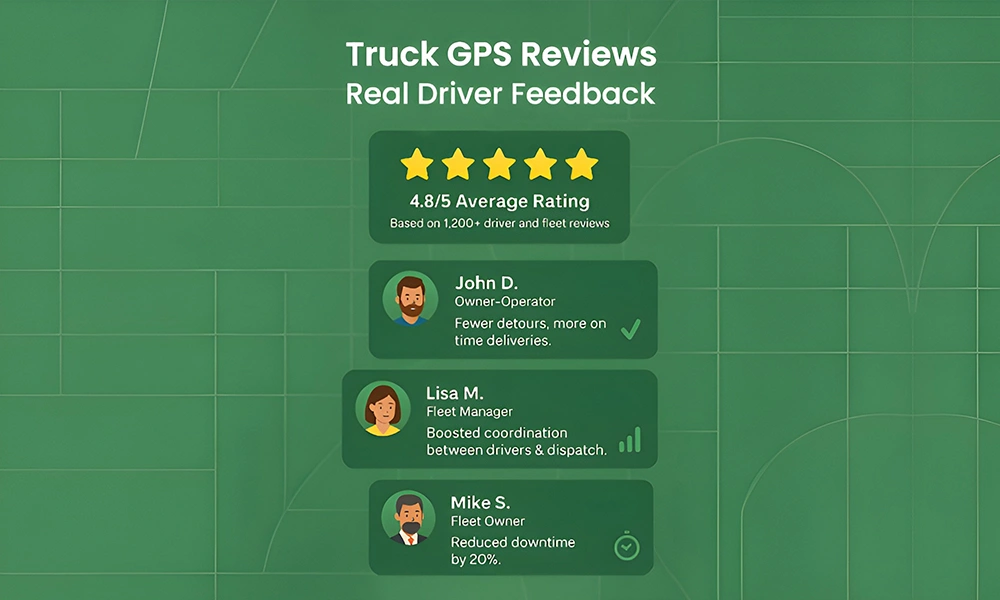
Insights from Truck GPS Reviews and Real Driver Feedback
First-hand and comprehensive truck GPS reviews are invaluable when making the appropriate choice of a truck GPS. These reviews include truck-specific aspects such as accurate truck navigation, user-friendliness, and updated routing information features that drivers and fleet managers consistently bring up. Consulting truck GPS reviews helps narrow the options to devices that meet real-world needs, ensuring a secure and reliable investment that will improve your fleet’s efficiency and drivers’ satisfaction.
Comparing the Best GPS Options for Truckers and Semi Trucks

The key to ensure efficiency within your fleet and keeping your drivers happy is to choose the best truck GPS. The mainstream designs of truck GPS are embedded with the entire competence of properly steering a truck, and added features like overweight load pathing and real-time traffic notifications.
In vetting options, it is advisable to read through truck GPS reviews to find out which device matches your needs and road conditions. Reliability and route efficiency make a good commercial truck GPS investment worth the money. Many fleets also compare devices based on durability, software updates, and ease of use.
With GPS vehicle tracking technologies, you can now take your entire fleet management to the next level, giving you greater control and reducing downtimes. Regardless of the number of trucks, it is imperative to ensure that you find the appropriate GPS that fits your trucks and semi trucks to remain competitive in today’s industry.
Conclusion
In conclusion, a reliable GPS for truck drivers is an important investment; any fleet must consider to improve efficiency, safety and driver satisfaction. As practice shows, the appropriate trucker GPS can help the truck navigate correctly and help the driver avoid unnecessary losses of time and the violation of norms. It will save time and money in the long run. When buying a GPS, fleet owners or managers should check its reviews because they are reliable and help choose the best truck GPS based on the particular needs of their fleet. With a small or a large fleet of trucks, the integration of a GPS for trucks along with a GPS vehicle tracking system offers good control of operations and a guarantee to the owner, as well as the vehicles’ drivers, that they have made a valuable investment that is going to yield in good ROI in the future. Epika Fleet provides commercial trucking with a specific GPS solution needed to manage the ideal truck GPS technology that matches your operation and budget.
FAQs
How accurate are truck GPS systems compared to standard navigation apps?
Commercial drivers are much more precise with a truck GPS than with regular navigation applications. A trucking GPS, unlike general applications, gives truck-specific routing, which includes height, weight, and road restrictions. A good trucking GPS eliminates mistakes related to poor road paths, which generic applications fail to detect, resulting in fewer accidents and on time deliveries.
Can a trucking GPS adjust routes for height, weight, and hazardous materials restrictions?
Yes, a good GPS for truckers relies on specific data to route them according to size, weight, and hazardous material requirements. This is particularly vital in the GPS of semi trucks, where the load and dimensions differ so much. Such customization can help drivers evade unlawful routes. These customized truck directions guarantee adherence, as well as minimize the time to deliver goods.
Do truck drivers still need paper maps if they use GPS for trucks?
Although the current application of GPS for trucks provides a detailed route, lots of truck drivers carry paper maps to use as an alternative. Disconnections, loss of signal, or random detouring make hard copy maps a prudent backup. The best GPS for truckers will be the one that resolves all such cloud related (connection) problems.
What factors should new drivers consider when choosing the best GPS for truckers?
When choosing a GPS system for truck, drivers are advised to seek one with precise truck routes, intuitive interfaces, and prompt updates. Endurance and live traffic notifications are important as well because using these features of a GPS across fleet trucks enhances navigation and operational insight.