
How to Change CDL From Intrastate to Interstate?

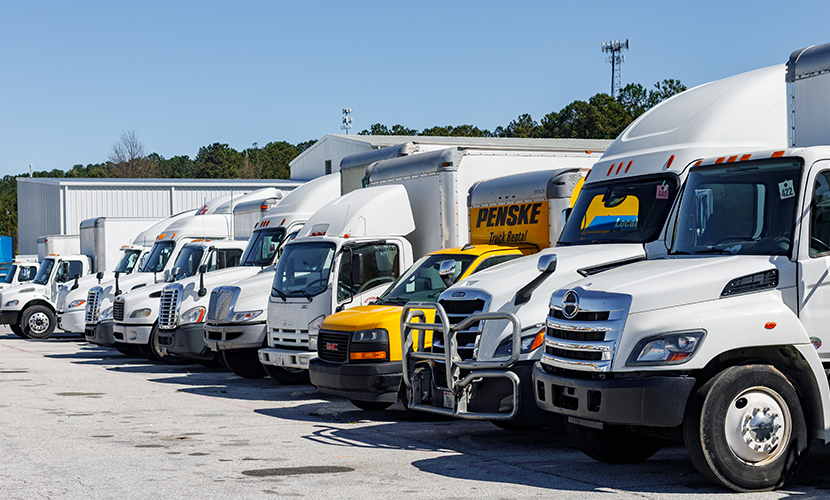
The process of converting an intrastate CDL to an interstate CDL is a task many drivers go through.It is something many drivers and fleet operators struggle with as they extend their routes outside of state lines. Switching your CDL status will enable you to transport freight across states within the confines of the law and expand your business. It is done by renewing your Commercial Driver/Licence (CDL) and could be accompanied by extra endorsements based on your operation.
To know how to change CDL from intrastate to interstate is paramount to abiding by the rules and escaping hefty penalties. The paperwork can be simplified by often beginning the process online using your state DMV or licensing agency. But to the contrary, if you’re asking, can I change my CDL from interstate to intrastate? The answer is yes, but it differs from state to state. To change the restrictions of your license, you will be required to give notice to the DMV and produce documents in most states. However, compared with the opposite (making CDL intrastate to interstate), it can limit your activities exclusively to your home state. Clarity in terms of these steps is appreciated by the fleet managers and the drivers. To get practical guidance and specific instructions, visit Epika Fleet to find resources about CDL transitions.
Who Issues a CDL?
One of the first and most important things to know about interstate and intrastate trucking is that there are different authorities in play.

First of all, you have the FMCSA. The Federal Motor Carrier Safety Administration is the federal government’s regulating body that sets rules and standards for the operation and safety of commercial motor vehicles across the country. They set rules, and they govern registrations and regulations, but critically, they do not issue CDLs themselves. They are, essentially, a governing body that sets the bare minimum rules to ensure that all states have at least a certain level of safety, as many states add their own more stringent rules on top.
Actual CDLs, whether intrastate or interstate, are instead issued by the Secretary of State or Department of Motor Vehicles (DMV). The process to obtain or update your CDL is handled at the state level. Even though the requirements to get a CDL are largely consistent across states, there may be additional rules or restrictions depending on where you live.
For example, if your CDL has a K restriction or you’re wondering what is K restriction on CDL, these detailed rules and endorsements are managed by your state DMV. If you want to learn how to remove restriction K on CDL or understand what does restriction K mean on a driver’s license, you’ll need to consult your state’s licensing office.
For more insights and step-by-step guidance on these DMV procedures, restrictions, and updates, visit Epika Fleet, where you’ll find resources tailored for fleet owners and drivers navigating these licensing changes.
What is an Intrastate CDL?
A commercial driver’s license (CDL) for in-state use only allows a driver to use a commercial vehicle in their home state. This is often called an intrastate CDL, and understanding what intrastate only means is essential for drivers and fleet managers alike. It’s perfect for all sorts of driver tasks, from local deliveries within the city to long statewide trips.
Let’s see how it works: the in-state restriction (often referred to as intrastate) sets the boundaries for where you can legally drive, while the CDL class determines the types of vehicles you’re authorized to operate. For instance, if you want to drive enormous vehicles like tractor-trailers or vehicles that weigh 26,001 pounds or more, and a towed unit with a GVWR of over 10,000 pounds, then you’re going to need a Class A CDL.
On the flip side, Class B and Class C CDL cover smaller or more specialized vehicles. They allow you to drive different types and sizes of vehicles to meet certain transport needs within the state. Ultimately, it’s about obtaining the right CDL for the job within your state.
A handful of examples can help illustrate this.
- Imagine you have a load that begins in New York. This load travels by rail to Illinois, where a CDL driver picks it up and delivers it to a location in Chicago. This driver, though he didn’t leave Illinois, must have an interstate CDL because the load’s overall journey crosses state borders.
- Now consider a load that starts in Baton Rouge, Louisiana, and is bound for Ferriday, Louisiana. The fastest and most efficient route for this load passes briefly through Mississippi, in north through Route 61. However, this route takes the truck out of Louisiana into Mississippi as part of the journey. Even though the load is bound to the same state, the driver needs to have an interstate CDL because the route crosses state lines. This proves why a driver must understand what does CDL intrastate only mean and when a switch to interstate is needed.
- A postal company like UPS provides everyday examples. Loads carried from a shipping hub to a warehouse in another state need to be carried by a driver with an interstate CDL; however, the drivers who deliver loads locally from the warehouse to the surrounding area do not need an interstate CDL, because the individual deliveries are considered different loads. This distinction clarifies what is restriction K on CDL.
These examples are just scratching the surface of the difference between interstate and intrastate CDLs; they show how varied and nuanced the regulations can be. Understanding these distinctions is the key if you’re wondering how to remove restriction K on CDL, to stay compliant.
What is an Interstate CDL?
A driver can utilize an interstate CDL to transport loads across different states and even beyond national borders. It’s particularly important for people engaged in long paths spanning many regions or countries. Understanding how to change CDL from intrastate to interstate is essential for expanding your driving opportunities and complying with the broader rules of interstate commerce.
Similar to state-specific CDLs, a driver’s permission to handle certain types of vehicles, Class A, B, or C, during business shifts is based on the type of vehicle and cargo involved. Be it a heavy tractor-trailer or a bus filled with people, interstate CDL holders must also meet slightly tougher requirements, since they operate under more complex regulations dictated by different states and federal guidelines.
Interstate commerce encompasses long-distance transport and certain accords, allowing some CDL holders to haul loads into neighbouring countries. The focus isn’t solely on the driver crossing state borders but also on where the cargo originates and where it’s off to. Therefore, it caters to the broader range of commerce taking place between states.
In general, the requirements for an interstate CDL are slightly higher than those of an intrastate CDL, but the difference is relatively minimal in most cases. In fact, for many drivers, the switch is as simple as filling out a form.
It’s important to learn what is restriction K on CDL and how it limits your hauling options across states. Knowing how to remove K restriction from CDL can broaden your interstate hauling capabilities and open up new business opportunities.
Are There Specific Insurance Requirements for Different CDLs?
Yes, there are specific insurance requirements that differ between intrastate and interstate CDLs. Typically, an intrastate CDL will require a baseline insurance coverage level suited to operating within one state. However, when you decide to remove CDL K restriction, you should be ready for higher insurance coverage demands. Interstate operations usually require greater liability limits due to the increased risks involved in crossing state lines and hauling over longer distances. Additionally, certain types of loads, like hazardous materials, oil, or very heavy shipments, carry their own elevated insurance requirements.

The FMCSA sets minimum requirements, but many states add additional requirements on top.
While drivers themselves are responsible for maintaining the proper CDL status but navigating insurance requirements is often the task of the fleet manager or the shipping company.
Understanding these insurance requirements as part of your CDL status change process helps protect your fleet, your drivers, and your bottom line. Accessing expert resources can make all the difference, so visit Epika Fleet to find detailed guides and get answers to common CDL insurance and regulatory questions.
Can I Change My CDL From Intrastate to Interstate Online?

If you’re asking, can I change my CDL from intrastate to interstate online? So the good news is that many states now offer online options to begin the process. Submitting your application online can save you time and reduce paperwork, making it easier for busy fleet managers and drivers to upgrade their licenses.
But it depends on the state’s DMV system and local regulations. Keep in mind that if you have a CDL K restriction, you may also need to complete special training or tests before the interstate status is approved. And some states may still require in-person visits or additional endorsements before finalizing the change. After submitting your documents, processing times can range from instant approval to a couple of weeks. Once approved, your new interstate CDL will be issued.
What is the Medical Examiner’s Certificate?
Because of the inherent risk and danger of operating a massive multi-ton commercial vehicle, drivers are held to higher standards for health and physical ability. They must obtain a Medical Examiner’s Certificate (MEC) that qualifies them for trucking issued by a certified medical examiner. An updated MEC is crucial for removing the K restriction on CDL and upgrading to interstate driving. Without an updated medical examiner’s certificate, a driver’s commercial driving privileges may be downgraded.

According to the FMCSA, all commercial drivers of vehicles in interstate commerce with a maximum gross vehicle weight rating over 10,000 pounds (4,536 kilograms) are required to obtain and maintain a valid Medical Examiner’s Certificate.
Commercial drivers have two additional requirements besides a CDL.
- On or after January 30, 2014, CDL holders must also declare their operational category through self-certification with their State Driver Licensing Agency. – FMCSA.
- Drivers with physical impairments (e.g., a hand or finger, an arm, foot, or leg) that affect their ability to operate CMVs safely must obtain a Skill Performance Evaluation (SPE), which serves as a special variance allowing to operate commercial motor vehicles safely. Drivers carrying this variance must keep it with them at all times while driving.
This is critical information for anyone considering how to change CDL from intrastate to interstate, as interstate drivers must maintain up-to-date health qualifications.
Can a Driver Have Multiple CDLs?
A common question is whether or not these CDLs are mutually exclusive.
- Does a driver need both an interstate CDL and an intrastate CDL?
- Does a driver need an interstate CDL for each state they will travel through?
To clarify, each driver can only have one valid CDL at a time. It’s illegal to hold more than one, and doing so can lead to fines or even jail time.
You don’t need separate CDLs for interstate and intrastate driving. One CDL covers both, depending on the restrictions and endorsements on the license. For example, an intrastate license is sufficient for hauling that stays within state borders. Companies focused on local deliveries typically require only intrastate licenses. On the flip side, an interstate CDL is necessary for hauling loads across state lines or engaging in commerce that extends beyond one state.
Though the CDL is singular, special hauling circumstances demand additional endorsements and training.
- If you’re hauling double or triple trailers
- carrying hazardous materials (often connected to a CDL K restriction)
- operating tank vehicles
- or transporting passengers like on a bus
You’ll need to meet extra requirements and hold applicable endorsements.
It’s important to understand that these restrictions affect what cargo you can legally transport across state lines. Many drivers wonder, Can I change my CDL from intrastate to interstate? Given the legalities, updating your CDL status and endorsements typically happens through your state’s DMV.
FAQ’s
Can CDLs be transferred from one state to another?
Yes, CDLs can be transferred from one state to another when you move. You must apply at the DMV in your new state, surrender your old CDL, and provide required documentation such as proof of residency. It’s illegal to hold CDLs from multiple states, so your previous license will be invalidated.
What states do you need intrastate authority in?
You need intrastate authority to operate solely within state borders in states such as Alabama, Arkansas, California, Georgia, Illinois, Michigan, Minnesota, Missouri, New York, Ohio, Pennsylvania, Texas, Virginia, Washington, Wisconsin, and others. Each state has unique rules, so always check with the appropriate agency before operating.
Do I need a USDOT number for intrastate?
A USDOT number is required for intrastate carriers in many states, especially if your vehicle meets certain weight or passenger thresholds, or if you transport hazardous materials. States like California, Texas, Florida, and Washington require a USDOT number for intrastate operations, so check your state’s regulations to ensure compliance.
Need Support for Interstate Trucking?
If you’re navigating how to change CDL from intrastate to interstate, getting the right support makes all the difference. Fleet managers and owner-operators like James and Maria at Epika Fleet found that leveraging proven resources and getting clear answers on what is K restriction on CDL helped them expand routes smoothly. Need help with your CDL questions or removing restrictions? Visit Epika Fleet to access practical tips and real-world expertise tailored to your needs. Keep your fleet rolling without the headaches!
