
Fleet Inspection Guide: How to Prepare Your Commercial Vehicles

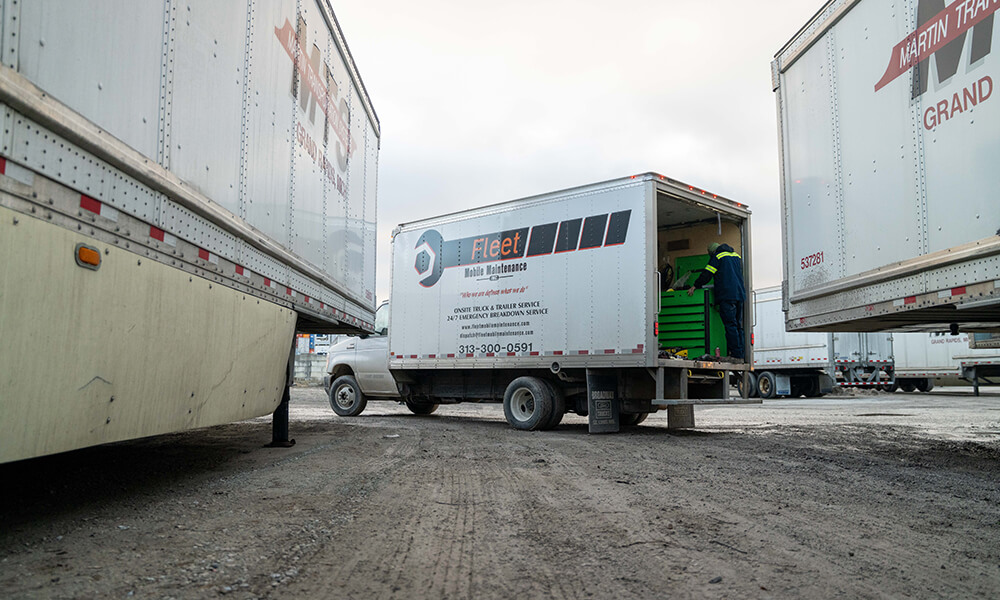
It starts with one missed fleet inspection. A minor issue slips through, a brake line weakens, and soon a truck is stranded mid-route. You lose time, revenue, and reputation. Fleet inspections are not only for compliance, they are to protect you from breakdowns, DOT fines, and downtime. With a solid fleet vehicle inspection checklist, you will be able to catch problems your driver might have missed. It keeps the entire fleet running safer, smoother, and longer. An ounce of maintenance beats a ton of repair.
Significance of Fleet Inspection for Commercial Operations
Any business fleet relies on reliability, and reliability starts with daily fleet inspection. Such checks guarantee all the vehicles are usable, compliant, and functioning optimally. From large haulers to delivery vans, scheduled checks ensure that minor mechanical problems do not turn into big repairs. Crash-tested fleet vehicle inspection checklist helps with the detection of possible failures in advance. This enhances uptime and safety. The result? Less unexpected breakdowns, fewer DOT fines, and a more predictable preventive maintenance schedule that saves both time and money.
One analysis of maintenance-related violations reported by the FMCSA shows that fines for general maintenance violations (non-recordkeeping) can reach up to USD 19,246 per violation in 2025.
Long-term operational health is also supported by fleet inspection services. They offer the data that assists the managers in planning the repairs, controlling the drivers’ habits, and maintaining vehicles in accordance with the FMCSA and safety regulations. More to the point, regular monitoring creates a safety culture that safeguards assets and individuals. In the case of expanding fleets, inspection reports can show performance trends. Budgeting and replacement planning can be done better with these reports. Stay consistent because that will make all the difference.
Major Components of a Fleet Inspection
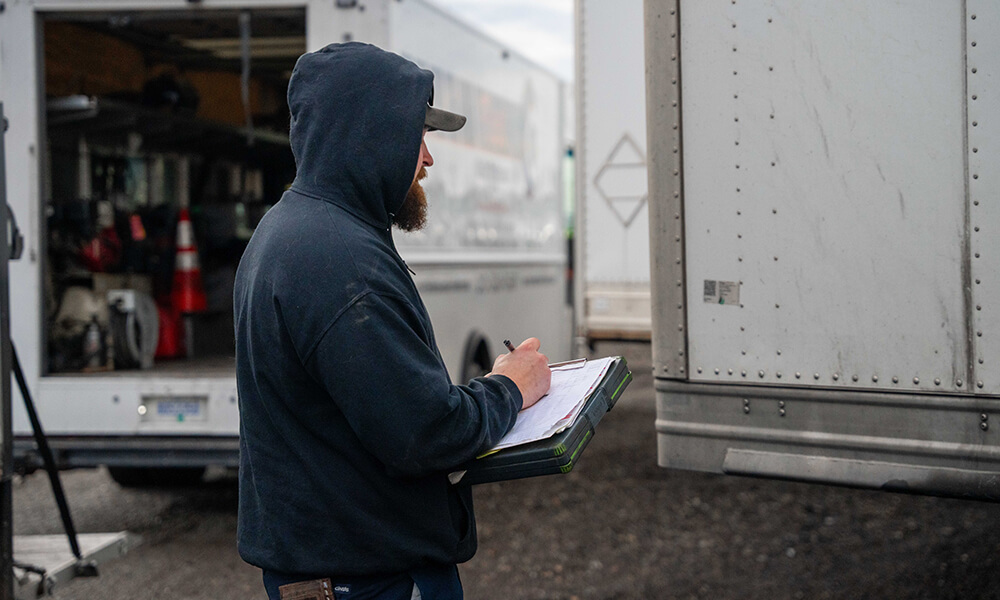
A strong fleet examination includes systems that ensure vehicles remain safe and legal on the road, not only today but also throughout the lifecycle of the vehicle. Enlist a powerful fleet automobile inspection checklist, before and after the trip. It will help you document imperfections early on, both external clear damages to internal brake malfunctions and electronic malfunctions.
The fleet vehicle inspection has to be mapped to accepted standards (North American Standard Level I procedure). This is how your crew will also be aware of what they should look at. Knowing how an inspector will assess the vehicle beforehand will prepare them better. Regular inspections minimize out-of-service incidents. You will be able to prioritize repairs before they result in expensive repairs.
Exterior/body checks
Begin each inspection by conducting a walk-around of the vehicle. Observe body, lights, mirrors, windshield, tires, wheels, lug nuts, and securement. Tire pressure and tread depth, visible tire damage, broken or loose mirrors, and visible body damage that might affect visibility or cargo security should be listed in a fleet inspection checklist. Record all corrosion, frame damage, or missing identification markings (USDOT numbers) to have repairs and re-marking scheduled as soon as possible. You can contact Epika Fleet for truck body repair.
According to the Commercial Vehicle Safety Alliance (CVSA), during their 2024 “International Roadcheck”, tires were the second-highest vehicle out-of-service (OOS) violation category — accounting for ~21.4% of all vehicle OOS violations.
Engine and Brake Systems
Popular inspection hotspots are engine, fuel, exhaust, and brake systems. Check unusual noises, fluid leaks, exhaust, and fuel systems without any visible leakage, check brake lining, drums/rotors, and air lines (on air-braked vehicles) are in spec. Periodic brake inspections significantly reduce the chances of going out of service
Brake-related issues continue to dominate out-of-service violations. In 2025’s Roadcheck, brake-related OOS violations accounted for 41.1% of all vehicle OOS violations.
Electrical and Safety Systems
Quick fails include electrical systems and safety equipment. Check all lighting controls, battery connections, and wiring against chafing or corrosion. Digital checks should also be part of modern fleets. They enable the inspection process to identify intermittent electrical faults that cannot be observed during a walk-around, including diagnostic fault code, telematics warning, and ELD logs. A fleet inspection app or digital fleet inspection workflow can speed up the achievement of defects, assign repairs, and maintain historical records to analyze compliance and trends.
According to FMCSA compliance tables, common violations in the category of “Parts & Accessories” include missing or inoperative lamps (lighting), and tire deficient tread depth (which overlaps with body/exterior) — showing electrical/safety components are among the top vehicle maintenance issues.
Daily Fleet Vehicle Inspection -The First Line of Defense.
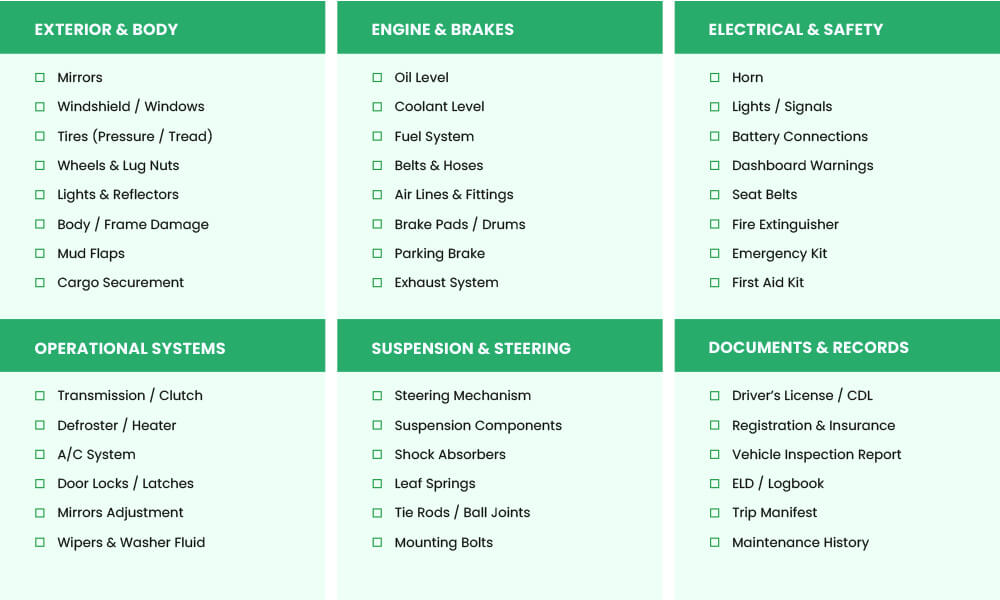
It is not only a legal mandate — a daily inspection of your fleet vehicles is your ultimate preventative measure against roadside failures and safety offenses. This is the reason why all drivers are supposed to fill in a formal daily fleet vehicle checklist pre-trip and post-trip. The following checklist is based on safety considerations: brakes, tires, steering, fluid levels, lighting system, wipers, mirrors, and coupling components. A consistent method of recording such checks guarantees DOT compliance, less liability, and assists in identifying wear before it becomes expensive downtime.
Switching from paper logs to a digital system for fleet safety inspection will facilitate accuracy and responsibility. The fleet inspection application allows drivers to post photos, mark problems in real-time, and alert maintenance teams. Digital checklists also facilitate easier tracking of recurrent defects.
Daily Fleet Vehicle Inspection Checklist
Transitioning to Digital Fleet Inspection.
When your fleet continues to use paper checklists, it is time to transition into efficiency. A computerized fleet inspection sheet adds order, precision, and responsibility to your operations. Digital forms capture all the information in real time, unlike manual sheets, which can be lost or left unfinished. Drivers will be able to record inspections through the use of their mobile devices, add photos, and report defects in real time. Using just one dashboard, managers get alerts, monitor pending concerns, and see the inspection trends. This immediate visibility will reduce the problem of missed maintenance and will ensure that no safety issue falls through the cracks.
Benefits of Digital Fleet Inspection
- Improved accuracy
- Real-time updates
- Streamlined record keeping
- Enhanced accountability
- Integration with maintenance systems
- Data-driven insights
- Increased compliance
- Time and cost savings

Partnering with Epika Fleet for Professional Fleet Inspection
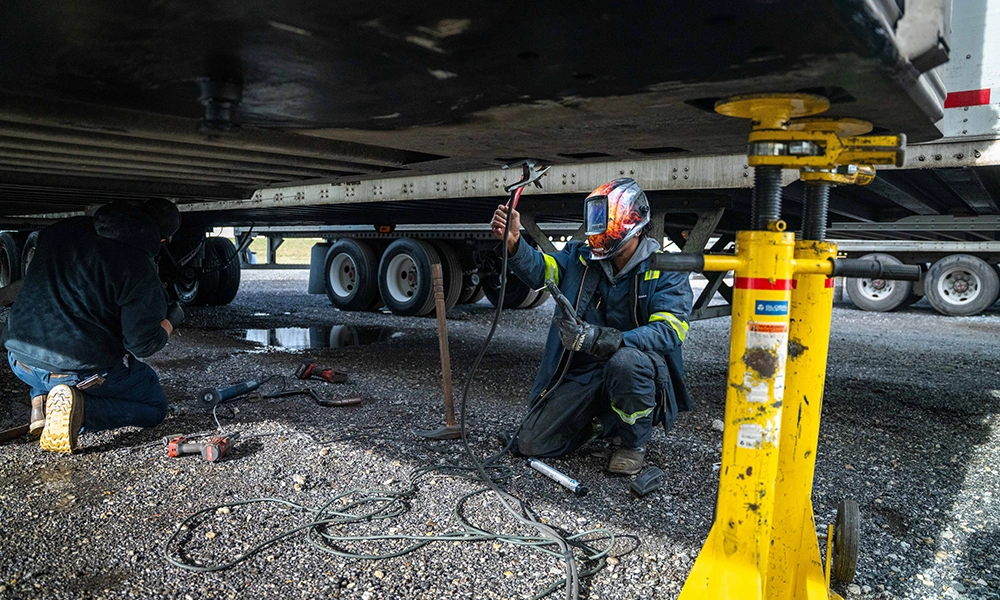
Even the most seasoned fleet managers are aware that some of the problems can go unnoticed. Collaborating with Epika Fleet will provide professional diagnostics, compliance, and warranty. Our professional technicians take advantage of high-tech equipment to find out the mechanical, electrical, and safety problems concealed behind the scenes before they turn into an expensive breakdown. We make our trucks compliant with DOT and FMCSA standards to be fully audit prepared. Epika Fleet enables you to streamline your inspection process, giving you detailed digital reports, predictive insights, and maintenance recommendations.
FAQ’s
What is a fleet inspection?
A fleet inspection refers to a systematic inspection of all commercial vehicles to confirm their safety and compliance. It includes checking brakes, tires, engines, lighting, and safety systems to check the maintenance requirements before they lead to breakdowns or even DOT violations.
What should be the frequency of fleet inspections?
Daily by the drivers and semi-annual by certified inspectors. Problems can be eliminated in the early stage before they turn into a full-blown emergency. With regular inspection, you’ll have better adherence and durability.
What do you think should be part of a fleet inspection checklist?
A full fleet overview checklist includes the outer damage, engine functioning, fluid levels, braking, suspension, lighting, and safety gear. Photo uploads, defect reporting, and auto record storage are also possible and can be included in digital templates to enhance accuracy and accountability.
What are the advantages of a digital fleet inspection system?
Reporting and communication are simplified by using a digital fleet inspection system. It can be performed using a fleet inspection app, allowing drivers to fill out checklists in a short amount of time, include photos, and issue instant notifications to managers. This will remove paperwork, it will be consistent, and assist in monitoring problems before they lead to downtime.
Does Epika Fleet Services offer fleet inspection solutions?
Yes. Epika Fleet Services offers skilled fleet inspection services aimed at ensuring that your vehicles are legal and functional. Our fleet inspection station offers daily checklists, online reporting, and certified inspections to ensure that fleets continue to perform, minimize breakdowns, and be ready to be on the road year-round.