
Top Fleet Management Key Performance Indicators to Track in 2026


If you want to keep your trucks rolling and profits up in 2026, then you’d better watch your fleet management KPIs like a hawk. As prices increase, the regulatory framework is more rigorous than ever, and new technology appears on every corner. Monitoring the appropriate fleet management key performance indicators will enable you to improve efficiency, reduce costs, and outdo your rivals. A good KPI fleet management solution converts daily tasks into actions that make money.
Fleet management key performance indicators aren’t just numbers; they’re your roadmap to fewer breakdowns, happier drivers, and trucks that stay on the road, making money. Whatever your role, as an owner, operator, or overseeing a fleet of vessels, thinking about the correct fleet management KPI indicates that there will be shorter downtime, more savings on fuel, and a productive and safe crew.
What Are Fleet Management KPIs?
The key performance indicators of fleet management are quantifiable and reveal the level of performance of your fleet. These are the KPIs of fleet management that include fleet fuel efficiency, fleet management costs, driver safety, and vehicle utilization. With the help of these fleet management key performance indicators, you can detect problems at an early stage, adjust the realistic goals, and make better business decisions. An effective KPI fleet management structure is key.
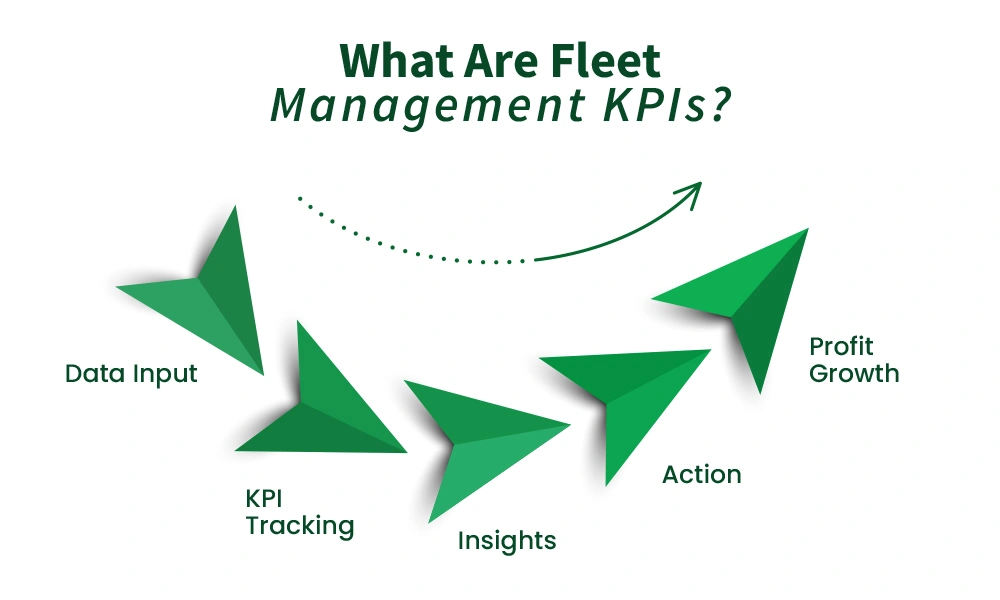
A good fleet management dashboard KPI provides you with a clear picture of what is going on. It assists you in comparing the present performance with the previous results, draws trends, and shows where to improve. The correct KPI in fleet management will help you increase efficiency in managing the fleet, reduce the expenses on this goal, and have no surprises about your trucks on the road.
Boosting Fleet Management Efficiency with the Right Strategies
Not only do you need a gut feeling, but you must have a data-driven approach with well-informed fleet management key performance indicators to best manage your fleet. The availability of a fleet management KPI dashboard assists you in keeping track of important metrics in real time, thus enabling you to make fast decisions to change routes, fuel spending, and vehicle maintenance. It implies fewer headaches and extra money in a pocket.

Not using a fancy Transport Management System? No problem. Plenty of fleet managers track KPIs on spreadsheets, Post-it notes, or group chats. It’s not about the tool, it’s about consistency. Even a clipboard and calendar can keep your preventive maintenance and fuel tracking on point.
The intelligent fleet managers employ the use of telematics technology, as well as frequent reports, so as to identify the trends and correct them before they translate into expensive problems. With proper key performance indicators in fleet management and a dependable key performance indicator fleet management system, you will minimize time spent off the road and maximize efficiency through your drivers and make your fleet more competitive even amongst larger operators with deeper pockets.
Top KPIs for Fleet Management
Achieving success is about monitoring the proper key performance indicators of fleet management to remain competitive in 2026. The measures will enable you to count the things that matter the fuel prices, idling officers, queuing, and driver performance, with a perspective to taking corrective actions before it is too late. Monitoring the appropriate KPIs will ensure the absence of breakdowns, increased fuel mileage, and money in your pocket. No guesswork. Just facts that drive profit. The following are the 15 best KPIs your fleet should analyze to have them work to their full potential:
1.  Vehicle Utilization Rate
 Vehicle Utilization Rate
This indicator will tell you how many times your vehicles run compared to the idle time. When utilized high it is an indication that you are maximizing with what you have, and when low, it might be indicating overcapacity or untimely scheduling. Using it as a way to optimize utilization also reduces unwarranted expenses and increases ROI on every truck in your fleet.
2. Fuel Efficiency

One of the largest costs in fleet management is fuel. Monitoring your fuel efficiency is the ability to determine how well your vehicles are efficient and make savings. The fleet’s fuel efficiency with a smoother driving strategy can reduce your fleet management expenses by hundreds of dollars.
3. Maintenance Cost per Vehicle
 Maintenance Cost per Vehicle
The measure in this KPI monitors the entire fleet management cost in each unit, including repairs and SPM. Expensive services are a sign of either old machinery or poor service processes. This monitoring assists you in coming up with budgets and when to upgrade or replace them.
4. Average Vehicle Downtime
 Average Vehicle Downtime
The use of this KPI is to measure the number of days during which your vehicles are not in service due to breakdowns or repairs. Minimizing downtime will let you notice an increase in deliveries, customer satisfaction, and revenue. Mobile fleet maintenance services may also be necessary to avoid the need to send the trucks outside to have them serviced and to streamline the whereabouts of the truck preventative maintenance.
5. Fleet Availability
 Fleet Availability
This indicates the proportion of the fleet that can be taken into service at a particular time. The availability will be high, so that demand will be fulfilled, and the opportunities cannot be missed. It is a critical fleet KPI with respect to reliable business and customer satisfaction.
6. Cost per Mile
 Cost per Mile
It is better to determine how many dollars/miles [SA1] it costs per vehicle to operate, which will enable you to identify efficiencies. Under this KPI are fuel, maintenance, insurance, and so on. This number should be maintained to stay lower to stay competitive in close markets.
7. Preventive Maintenance Compliance
 Preventive Maintenance Compliance
Frequent repairs eliminate expensive repairs. The desired KPI measurement will monitor the consistency of your fleet in observing scheduled maintenance. A good compliance rate equates to fewer surprises and extended vehicle life, which helps in fleet management efficiency. DOT inspection are important and should be done with regularity to ensure your fleet does not get into costly downtime.
8. Safety Incident Rate
 Safety Incident Rate
This KPI compares the number of accidents, violations, or near-misses per mile or trip. The lower rate will imply safer operations, fewer liabilities, and lower insurance prices. Monitoring common fleet accidents in the fleet assists in curbing safety protocols and other risks. It should be the track of any fleet interested in safety.
9. Driver Productivity
 Driver Productivity
Observing the delivery efficiency, miles covered, and on-time record by the driver can determine the performance. It is a KPI that will allow you to give prizes to the best drivers and see who should be trained or supported.
10. Route Optimization
 Route Optimization
This is a pertinence that determines the efficiency with which routes are planned and operated. Properly optimized routes are fuel-efficient, minimize wear and tear, and increase the speed of delivery. With the help of this KPI, ensure that your fleet continues running smoothly and at a low cost to you.
11. Repair Costs
 Repair Costs
Monitoring the cost of repair independent of routine services allows you to identify trouble spots or the cars that have repeat problems. The prices on repairs can indicate that it is time to replace them or to reform your maintenance policy.
12. Total Cost of Ownership (TCO)
 Total Cost of Ownership (TCO)
TCO includes all the costs the vehicle undergoes between the time it is put on sale and the time when it is destroyed. This KPI will allow you to make wiser purchases and decide what to buy, maybe to lease, or to retire the vehicles, and to get the best out of your investment.
13. Accident Rate
 Accident Rate
The purpose of this KPI is to measure the number of accidents per vehicle or mile. High cost, legal exposure, and productivity loss may be the result of a high accident rate. This is one of the most important factors in safe and efficient operations.
14. Driver Turnover Rate
 Driver Turnover Rate
Large turnovers may interfere with the plans and raise recruitment expenses. Monitoring this KPI can assist you in learning what leads drivers to quit or how you can make them stay longer and be satisfied.
15. On-Time Delivery Rate
 On-Time Delivery Rate
This is a record of the proportion of deliveries obtained on time. Happy customers and repeat customers come with high on-time rates. It is one of the vital KPIs of a fleet that aims at service quality.
Tracking Your Fleet Management KPIs with Reports in Epika Fleet
Epika Fleet provides you with an opportunity to see all your fleet management KPIs at a glance. With a user-friendly fleet management dashboard KPI, you get real-time insights into vehicle utilization, fuel efficiency, maintenance costs, and more. The reports can be customized. This assists you in noticing trends, fixing hard-to-fix problems in a short period, and making decisions that ensure your fleet operates at an excellent level.

With Epika Fleets’ reporting capabilities, you will be able to drill in or out of specific fleet management key performance indicators, view historical results, and disseminate concise, important data to your team. You can minimize driver idling time to save costs, lower fuel prices, or enhance safety on the road; Epika Fleet provides you with the necessary parameters of measurement and ROI demonstration. Make your operations efficient and achieve the best performance out of every mile with Epika Fleet and its fleet management KPI tracking features.
Conclusion
Following the appropriate fleet management key performance indicators is the backbone of any smart fleet operation in 2026. Emphasizing known fleet management key performance indicators and best KPI for fleet management can help you increase effectiveness, reduce expenses, and keep your drivers and customers satisfied, all by staying ahead of industry shifts.

Don’t gamble your fleet’s future on gut alone. Dial in your KPIs. Track what matters. And let the data do the talking while you keep your drivers, loads, and cash moving in the right direction. Begin to measure these fundamental fleet management key performance indicators now using a well-placed system such as Epika Fleet. To run leaner, reduce breakdowns, and keep freight moving on time, it is necessary to start the journey with good data and good fleet management KPI tools.
FAQs
What are the metrics of fleet management?
The fleet management indicators are vehicle utilization, fuel consumption, the cost of maintenance of each vehicle, average stops, safety involvement, the number of productive drivers, the development of routes, and the overall cost of owning the trucks in your fleet. Such key performance indicators for fleet management will allow you to understand and enhance all the other features of your operations, such as costs and service quality.
How do you monitor fleet management?
You have an overview of KPIs over fleet management monitored in a fleet management KPI dashboard. With the help of telematics technology, you may observe the behaviour of drivers and the functioning of vehicles in real time. This will enable you to identify trends, solve problems on time, and have your fleet in an efficient running condition.
Why are KPIs important for fleet operations?
KPIs play an important role in the running of fleets as they offer objective information to make judgments, raise productivity, and curtail expenses. By observing the list of the right KPIs, you will be able to achieve the reduction of downtimes, increase safety for drivers, find the most optimal routes, and improve fleet management efficiency, so that while operating in the industry, you may have a competitive advantage.