
When to Replace Fleet Vehicles?

Over the years, many owners, operators, and fleet managers have learned that running a truck past its prime usually costs more than expected, then there is unplanned downtime, escalating repairs, and plummeting resale value. When to replace fleet vehicles isn’t about squeezing every last mile, but about maintaining a sharp fleet replacement schedule.
We will get to know with an example: A six year old truck with 240,000 km. It has paid off entirely and hence seems cost effective to keep it running. However, today, its repair cost is approximately $4,500 a year, it is not passing inspections more frequently, and it spends more days in the shop than on the road. In the meantime, its resale value is plummeting at an alarming rate and newer models are 25% more fuel efficient.
With smart vehicle lifecycle management that is backed by data and timing, you can keep track of your fleet’s performance, repair frequency and depreciation in real-time. This allows you to stay ahead of costly surprises and keep drivers happier.
When thinking about fleet replacement, weigh factors like fleet management cost, trends in fleet fuel efficiency, rising monthly repairs, and ELD compliance fines. It is not only about the present-day savings but also the future credibility, conformity, and status. Looking forward to reliable results? Contact Epika Fleet to protect your bottom line.
Key Indicators That Signal the Need for Fleet Replacement
When to replace fleet vehicles is an important factor that every logistic hustler, trying to minimize downtimes and bring down the fleet management costs, will need to take into consideration. A strict fleet replacement schedule can not only help guard against margin erosion but also keep your drivers in newer and safer equipment.
1.  Escalating Maintenance Costs
 Escalating Maintenance Costs
When to replace fleet vehicles becomes clear as your maintenance bills continue to climb. If your fleet management costs are approaching or even surpassing monthly payments on a new vehicle, it’s a classic indicator that your vehicle lifecycle management should be prioritized.
2. Decreasing Fleet Fuel Efficiency
 Decreasing Fleet Fuel Efficiency
It is essential to keep track of the fleet fuel efficiency trends. When an aged truck shows ineffective performance, it is one of the obvious indicators that your fleet trucks have reached their expiry date, and it is time to change the fleet. The newer vehicles have specifications that are more stringent, so that the total fleet management cost is lower and you are competitive.
3. Downtime and Missed Deliveries
 Downtime and Missed Deliveries
Continuous failure and inconvenience in schedules frustrate the drivers and customers. It also disturbs the cash flow.
One mid-sized construction fleet used this model to restructure its light-duty fleet replacement strategy. By switching to a five-year replacement window tied to service thresholds, they reduced unexpected downtime by 32% and improved resale value per unit by over $4,000.
4. Safety and Compliance Failures
 Safety and Compliance Failures
Failing a safety audit or recurrent difficulties with the standard DOT inspection will dictate that it is time to uplift fleet vehicle. When the safety characteristics of your fleet are outdated, and fines you receive because of compliance are frequent, that is a signal that it is time to adopt a more strategic approach to fleet replacement.
5. High Mileage or Age
 High Mileage or Age
An orderly fleet replacement schedule will take into account the age and the odometer reading. The U.S. General Services Administration (GSA) has certain standards in terms of replacing the fleet trucks in the form of vehicle type, fuel, mileage and age in the first place, when one of them is reached.
- For most light-duty fleet trucks, the industry benchmarks fall around:
- 65,000 miles or 7 years of service (non-diesel / gas).
- 150,000 miles or 8 years of service (diesel).
- for medium-duty trucks, the standard is:
- 10 years or 100,000 miles (gas)
- 10 years or 150,000 miles (diesel).
- And for heavy-duty trucks (diesel), it is 250,000 miles or 12 years of service.
-Google data
Once a vehicle approaches these thresholds, productivity drops, maintenance costs rise, and resale value declines sharply.
6. Unplanned Expenses Outweighing Benefits
 Unplanned Expenses Outweighing Benefits
When yearly expenses for an older vehicle eclipse those of a replacement, financing included, it’s time to let go. Align your decision with your vehicle replacement strategy, leaning on automated solutions and technology to monitor aging assets.

Key Factors for Building an Effective Fleet Replacement Strategy
Nailing down when to replace fleet vehicles is the backbone of a successful operation. A rock-solid fleet replacement strategy gives you the edge to boost uptime, cut fleet management costs, and keep your team rolling.
From working with owner-operators in Memphis to managers in Houston, one thing’s clear: only data-backed decisions and smart vehicle lifecycle management deliver results. Use proven practices and platforms like mobile fleet maintenance services and regular DOT inspections to keep that uplift fleet vehicle performing and costs predictable.
1. Data-Driven Decisions
In a strong fleet replacement strategy, actual data on mileage, repair patterns, and fuel use drive it. Staying proactive with reports helps you target the best moment for fleet replacement and lifecycle management, keeping your operation lean and informed.
2. Total Cost of Ownership (TCO) Analysis
Don’t just look at purchase price, track every dollar, from repairs to downtime. Outsmart expensive breakdowns with solutions like mobile fleet maintenance services, and optimize your fleet replacement schedule with these insights.
3. Scheduled Replacement Planning
Developing a disciplined fleet replacement schedule prevents surprise expenses and lets you plan for truck preventive maintenance in advance. Scheduling helps owners replace at the sweet spot: before costs skyrocket, but after you’ve maximized value.
4. Upgrading to Improve Efficiency
Integrating new fleet vehicles boosts fleet fuel efficiency and reduces common headaches. This translates to consistent improvements in vehicle lifecycle management and fewer unplanned stops.
5. Flexible Financing Solutions
Pass around the alternative lease, a loan, or a purchase. Financial flexibility can make it easier to refresh your fleet and stick to your replacement strategy without breaking cash flow.
6. Compliance and Safety Focus
Timely DOT inspection and maintenance of vehicles also contributes to avoiding penalties for noncompliance. Backing this with centralized and decentralized fleet maintenance keeps your fleet ahead of the curve.
Check out truck preventive maintenance, and connect with Epika Fleet for support getting the most from every fleet replacement and lifecycle management move. Keep your drivers happy, costs in check, and your business on the road.
Reasons to Implement a Smart Fleet Replacement Schedule
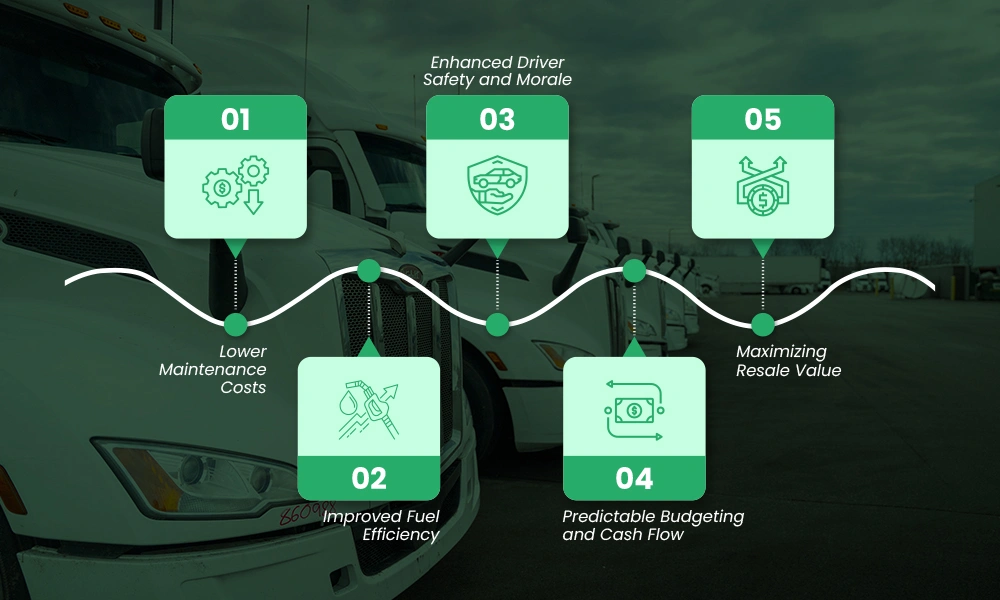
A reliable strategy for when to replace fleet vehicles is essential for a fleet manager aiming at reducing expenses and making them remain on the road. The smart fleet replacement schedule allows you to prevent unexpected costs and make drivers more satisfied since they have safer and younger vehicles. Pairing this strategy with mobile fleet maintenance services and regular DOT inspections optimizes your vehicle lifecycle management and uplifts fleet vehicle performance, making your entire operation smoother and more predictable.
1. Lower Maintenance Costs
A smart fleet replacement schedule reduces fleet management costs by retiring vehicles before maintenance expenses spike. Timely fleet replacement will help you avoid those surprise breakdowns that drain both time and money.
2. Improved Fuel Efficiency
Replacing outdated trucks boosts your fleet’s fuel efficiency. Newer vehicles use less fuel, saving thousands annually and helping meet evolving environmental standards.
3. Enhanced Driver Safety and Morale
More modern trucks with safety devices save the lives of drivers and decrease the liability. The safe and more happy drivers mean increased retention and on-time deliveries.
4. Predictable Budgeting and Cash Flow
Planned replacement schedule increases the rather unstable cash flow. Budgeting replacements is much more convenient as you are not taken by surprise, and you save yourself the bother of strained financial affairs.
5. Maximizing Resale Value
Selling vehicles before their value drops drastically recovers more capital for reinvestment. Timing replacements smartly maximizes your return and funds your fleet’s growth.

Fleet Replacement Strategy: How to Select the Right Next Vehicle
Deciding when to replace fleet vehicles is only half of the battle; to get the most effective next vehicle, you need to have a fleet replacement strategy that fits your operational and future requirements. Begin by approaching the main functions that are going to be done with each vehicle. Indicatively, long-distance transportation needs diesel-efficient vehicles. Durable trucks, whereas cell door deliveries may be served by manoeuvrable and lighter trucks. Using the vehicle lifecycle management tools, you are supplied with important information about wear patterns and costs of running, so that you can make uplift fleet vehicle selections that contribute to sustained efficiency and dependability.
Lastly, adopt flexibility in your fleet replacement strategy. Market changes, fuel efficiency improvements, and innovations in vehicle technology demand an adaptive approach. Centralized and decentralized fleet maintenance models can support this flexibility, allowing you to uplift fleet vehicles timely manner without disrupting service.

Conclusion
The question of when to replace fleet vehicles is a must for a logistics company in terms of cost management, the safety of its people, and ease of operations. To prevent expensive surprises, you should definitely have a proper fleet replacement strategy that will enable you to extend the life of the vehicles with truck preventive maintenance and increase the fleet’s fuel efficiency.
A smart fleet replacement and lifecycle management plan also improves budgeting by stabilizing fleet management costs and reducing driver frustration. Empirical evidence at real-world conditions demonstrates that vehicle lifecycle management enhances the resale value and stimulates ROI. Having experts on your side, such as Epika Fleet, means making sure that you adopt the winning strategy that best suits your circumstances, whether you have a small operation or a large fleet to manage. Don’t wait, optimize your fleet replacement today and keep your business moving forward.
FAQs
What is the life expectancy of a fleet vehicle?
A fleet vehicle’s life expectancy varies greatly but often falls within 5 to 12 years, depending on usage and replacement strategy. This lifespan can be prolonged by good vehicle lifecycle management through truck preventive maintenance. Industry variance and environment also affect when to replace fleet vehicles.
Is it smart to buy a fleet vehicle?
Buying a fleet vehicle is smart if you follow a solid fleet replacement strategy and stick to a reliable fleet replacement schedule. It ensures trucks stay efficient and safe. Investing in newer models improves fleet fuel efficiency, reduces downtime, and controls fleet management costs, key to knowing when to replace fleet vehicles.
Are fleet vehicles well-maintained?
Fleet vehicles can be maintained well, particularly when they are equipped with mobile fleet maintenance services and periodic preventive maintenance. The fleet replacement and lifecycle management practices are also very important when it comes to reliability. Operators who prioritize maintenance report fewer breakdowns and better safety compliance.
What is the cost per mile for fleet vehicles?
The actual average delivery cost per mile can vary depending on region, industry, vehicle type, and delivery model.
According to data from the American Transportation Research Institute (ATRI), the average cost per mile for commercial fleets in the U.S. was $1.855 in 2022, with fuel being the single largest expense.
Light-duty fleet CPM might focus on fuel, tires, and maintenance, while trucking fleets include significant driver wages and admin overhead.