
What Are the Commercial Truck Weight Limits?


Running a successful fleet ain’t just about the miles or the fuel efficiency; adherence to safety practices and commercial truck weight limits plays a critical role too. You wouldn’t want to invite steep fines, costly repairs, or putting lives in danger, would you? It’s never just about being compliant; it’s about safeguarding your assets and protecting your team.
No seasoned operator wants to be the one who miscalculates trailer axle weight yet still drives across state lines. The federal government, along with individual states, has established strict commercial truck weight limits for public safety and the protection of infrastructure. If you aren’t careful, the challenges will be much bigger and could put a real dent in your wallet.

What Is Gross Vehicle Weight Rating (GVWR)?
First off, let’s talk GVWR. It’s not what your truck weighs empty nor is it just the cargo. The Gross Vehicle Weight Rating (GVWR) is the maximum operating weight your vehicle can handle, as set by the manufacturer (FMCSA, n.d.). This includes the vehicle itself, its fuel, engine fluids and oil, as well as the passengers and all cargo.
Every component of your truck contributes to the GVWR and understanding this is fundamental before you even hook up a trailer or load a single box. It’s a design limit, plain and simple. Even if you’re within federal or state commercial truck weight limits, exceeding your truck’s GVWR increases the wear and tear on your rig with a higher risk of mechanical failure, boiling down to more spending for maintenance and repairs.
What Are Axle Weight Limits?
Now, the GVWR is one thing, but the rubber meets the road, quite literally, through your axles. Axle weight limits define the maximum weight that can be placed on each axle or a group of axles (FHWA, n.d.). This is where a lot of trouble starts for the drivers, and for those who do not load smart and forget the commercial truck weight limits, it gets downright ridiculous.
Think of it this way: your truck’s weight needs to be spread out. Too much weight concentrated on one single-axle trailer weight limit or a double-axle trailer weight capacity can put undue stress on the pavement, cracking roads and straining bridge supports. That’s why DOT weight limits per axle are just as critical as the overall commercial truck weight limits.
For commercial truck weight limits per axle, federal regulations typically allow:
- Single axle: up to 20,000 pounds
- Tandem axle: up to 34,000 pounds
- Gross vehicle weight: up to 80,000 pounds
How Does the Bridge Formula Weight System Work?
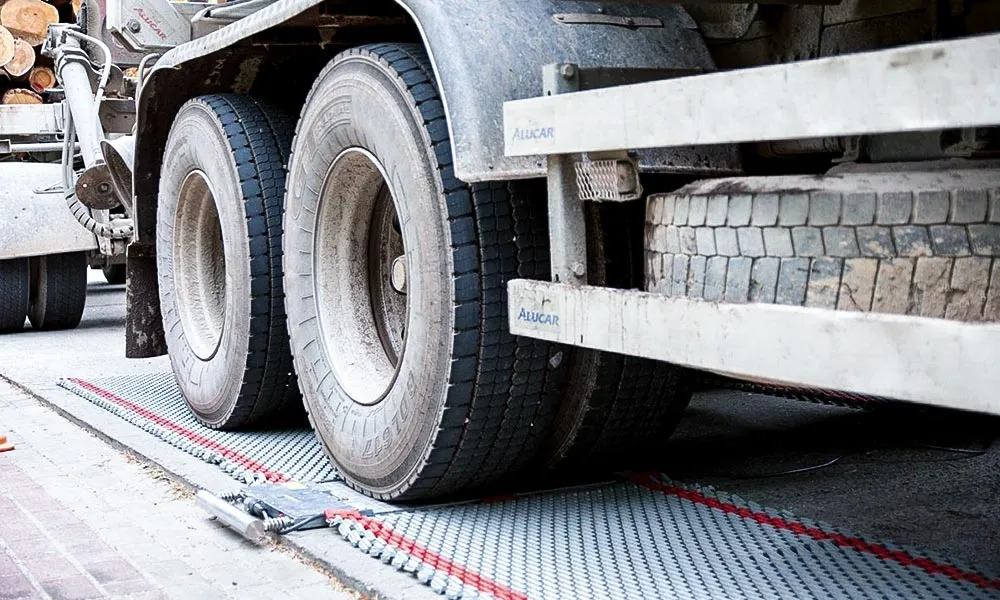
The Bridge Formula is not just a random rule within federal law, but a set of mathematical equations which work to protect our bridges from undue damage by heavy loads (FHWA, n.d.). It calculates the maximum amount of weight that may be placed on a group of two or more axles based on the number of axles and the distance between them. It’s all about the lengthwise distribution of weight.
This formula ensures that portions of a bridge do not bear more concentrated loads than others by careful calculation of the heavy loads that are spread out over a sufficient wheelbase. Even if your truck is under the 80,000-pound gross vehicle weight limit, if your axle spacing does not meet the requirements of the Bridge Formula, you could be in violation (FHWA, n.d.) . It is a substantial piece of the commercial vehicle weight limits puzzle.
How Much Weight Can Each Trailer Type Haul?
For all trailer types, both the maximum weight and the legal limit are determined by the number of axles the trailer has. A single-axle trailer weight limit is usually about 20,000 lbs on the Interstate System. This is generally for lighter loads or particular hauling jobs where maneuverability is more important (FHWA, n.d.) [1].
Moving up, you will most likely come across double-axle trailer weight capacity or even 3-axle trailer weight capacity for heavier hauls. A tandem axle group (two axles more than 40 inches and less than 96 inches apart) is federally limited on the Interstate to 34,000 lbs (FHWA, n.d.) [1]. For configurations such as a 53′ trailer weight capacity, especially for flatbeds, you are looking at combinations of tandem axles, most often two sets, distributed to meet the Bridge Formula. A 53 ft flatbed weight limit is subject to variation based on the total number of axles and their spacing and can range between 45,000 and 48,000 pounds, though always with the 80,000 lbs limit for gross weight in mind for most interstate travel unless special permits are obtained.

What Are the Legal Axle Weight Limits for Commercial Trucks?
The permitted commercial truck weight limits on the Federal (US) Interstate Highway System are pretty basic: a truck cannot weigh more than 80,000 pounds (gross vehicle weight), 20,000 pounds on a single axle, and 34,000 pounds on a tandem axle (FHWA, n.d.). Most of the cross-state hauls will follow these primary rules.
These are minimum federally set limits, and states can, and most of the time do, have particular criteria of their own, especially for roads off the Interstate System or for oversized/overweight permits. For example, certain jurisdictions may have specific caps on what is deemed a legal weight for a 53′ trailer per axle or a maximum axle weight for a tractor-trailer that exceeds the federal minimum (FHWA, n.d. [1]). Always check state guidelines through the Department of Transportation for the routes you are taking.
As to the case of the tractor-trailer axle weights, keep in mind that the steering axle usually has a lower limit, often around 12,000 to 15,000 pounds, while the drive axles (typically a tandem pair on the tractor) and the trailer axles (another tandem or tridem setup) carry the bulk of the load. The 18-wheeler weight limit per axle sums up these components, always subject to the overall gross and bridge formula.
The 53 ft trailer axle weight limit depends on the number of axles, their spacing, and the tractor’s axles, all used together to meet the Bridge Formula. Calculating the max weight on trailer axle helps prevent paying fines and damaging your loading equipment.
What Are the Legal Axle Weight Limits in Each State?
While federal rules are the same for all carriers, it’s when you travel to another state that things can get more complicated. Every state’s Department of Transportation has individual rules about commercial truck weight limits, with different parameters for special routes and specific hauling. Some states allow higher legal weight per axle for certain commodities or during specific seasons.
The information below is from the Federal Highway Administration of the U.S. Department of Transportation and details state laws about truck size and weight limits .
| State | Maximum GVW (lbs.) | Single Axle (lbs.) | Tandem Axle (lbs.) | Double Axle (lbs.) |
| Alabama | 80,000 (Interstate) | 20,000 | 34,000 (Interstate) | 42,000 |
| Alaska | No defined upper limit | 20,000 | 38,000 | 42,000 |
| Arizona | 80,000 | 20,000 | 34,000 | Per state weight table |
| Arkansas | 80,000 | 20,000 | 34,000 | 50,000 |
| California | 80,000 | 20,000 | 34,000 | Not defined in statute but subject to provisions |
| District of Columbia | 79,000 | 20,000 (when GVW ≥ 73,000) | 34,000 (when GVW ≥ 73,000) | Per district’s weight table |
| Florida | 80,000 | 20,000 | 40,000 | Per FBF |
| Georgia | 80,000 | 20,340 | 34,000 | Per FBF |
| Hawaii | 11,250 per single tire | 22,500 | 34,000 | 42,500 |
| Idaho | 80,000 | 20,000 | 34,000 | Per state weight table |
| Illinois | 80,000 | 20,000 | 34,000 | Not defined in statute |
| Kentucky | Up to 80,000 | 20,000 | 34,000 | 48,000 |
| Louisiana | 80,000 | 18,000 | 32,000 | 42,000 |
| Maine | 80,000 | 20,000 | 34,000 | 45,000 |
| Michigan | 164,000 | 18,000 | 32,000 | N/A |
| New York | 143,000 | Varies | Varies | Varies |
| Ohio | 80,000 | 20,000 | 34,000 | FBF on Interstate highways |
| Oklahoma | 80,000 | 20,000 | 34,000 | Per state weight table |
| Oregon | 80,000 | 20,000 | 34,000 | Per state weight table |
| South Dakota | 80,000 | 20,000 | 34,000 | Per FBF |
| Tennessee | 80,000 | 20,000 | 34,000 | 54,000 |
| Texas | 80,000 | 20,000 | 34,000 | N/A |
| Utah | 80,000 | 20,000 | 34,000 | N/A |
| Vermont | 80,000 | 20,000 | 34,000 | N/A |
| Virginia | 80,000 | 20,000 | 34,000 | N/A |
| Washington | 105,500 | 20,000 | Per State weight table | N/A |
| West Virginia | 80,000 | 20,000 | 34,000 | Per FBF Interstate and STRAHNET |
| Wisconsin | 80,000 | 20,000 | 34,000 | Not defined in statute, subject to state’s bridge formula |
| Wyoming | 80,000 | 20,000 | 34,000 | 42,000 |
Why Do Axle Weight Limits Matter?
These limits for DOT weight limits per axle aren’t just rules made by bureaucrats to annoy you; they are necessary for your protection. Let’s start with safety first. If a truck’s axle is carrying too much weight or the weight is not distributed properly, the rig becomes unstable. It increases stopping distances, makes rollovers more likely, and puts excessive strain on tires, leading to blowouts. We’ve all seen the consequences when trucks aren’t loaded properly and they’re not great.
Secondly, we consider the safeguarding of our nation’s infrastructure. Bridges and roads do not have an infinite weight capacity. Any additional weight beyond the set limit increases the rate of degradation, resulting in potholes, crumbling pavement, and damaged bridges, which cost taxpayers billions in repairs.
Complying with commercial truck weight limits and trailer axle weight limits enables us to do more than just avoid fines— it ensures that the infrastructure remains in good condition and safe for the public.
How to Comply with Axle Weight Limits?
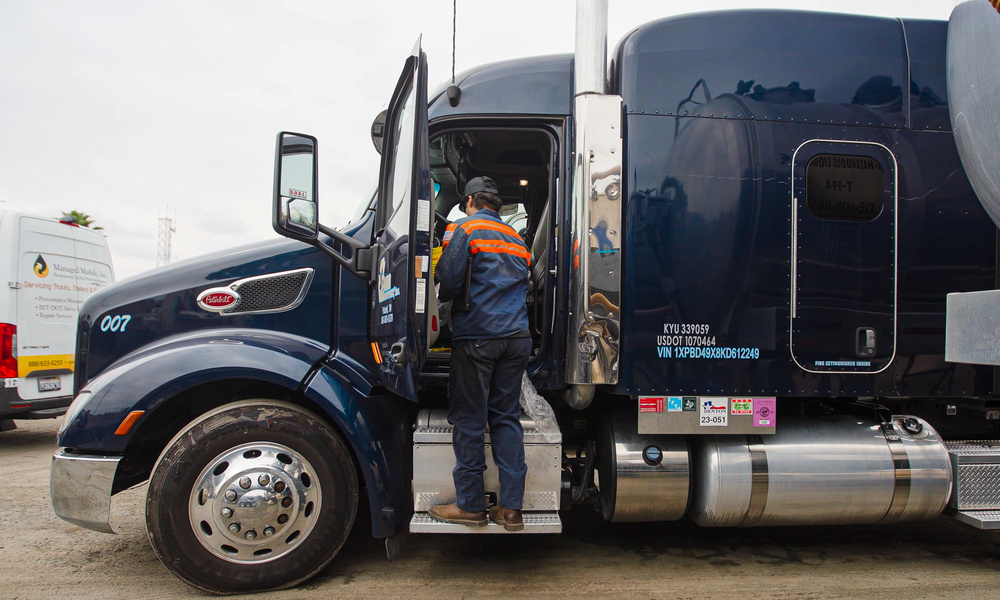
While compliance isn’t complicated, it does call for careful attention. The very first thing is to know your numbers. Understand your truck’s GVWR and the axle weight limits placed on it by both the federal and state governments. Check your tractor-trailer axle weights after you’re done loading, using either portable scales or public weigh stations, especially if you’re hauling variable cargo. Don’t rely only on your sight or the statement from the shipper; errors still occur.
Proper load distribution is key. Slide your trailer axle weight forward or backward as needed to balance the load across your axles. Even a few inches can make a difference in your legal weight per axle. If you’re always on the brink, consider putting some onboard scales on your vehicle. These scales ensure you stay compliant and save you from sudden issues when weighing your truck. Looking to trim down your fleet weight further? Check out our recent blog on weight reduction of fleet trucks.
Conclusion
Successful fleet management demands strict compliance with commercial truck weight limits. It’s not solely about the avoidance of penalties – it’s far more complex than that. There’s a level of safety to be upheld, damage to your equipment to avoid, and maintenance of your nation’s roadways. From knowing the DOT weight limits per axle to the Bridge Formula, and state-specific regulations – everything matters.
Stay up to date, purchase the appropriate tools for weighing and distribution, and always prioritize compliance. An optimized fleet is a profitable one, and that all comes down to precise knowledge of what is being transported and its load distribution across the axles. Do not leave it to chance; your reputation and livelihood depend on it.