
Fleet Management Trends in 2026

Ever feel like trucking’s changing faster than you can downshift? Before, all you had to worry about was whether the rig would stay intact and have your delivery on time. Today, all this is turned upside down, and one must address technology and regulations that reframe market shifts in every possible aspect. Abiding by the recent fleet management trends is not just keeping up with trends; it is the key to earning profits and ensuring that your wheels keep rolling.
Today, change has been unprecedented. Previously, air conditioning and CBs (Citizens Band radio) were seen as luxuries in a cab. In the current world, the situation in the fleet management industry is rapidly changing, and this is a prompt to pay attention to it. These are the fleet management trends that you should not overlook in order to have a well-run vehicle. It is about using the new tools and gaining knowledge in order to outsmart the competition, keep your drivers happy, and make sure your operations become as lean and efficient as possible.
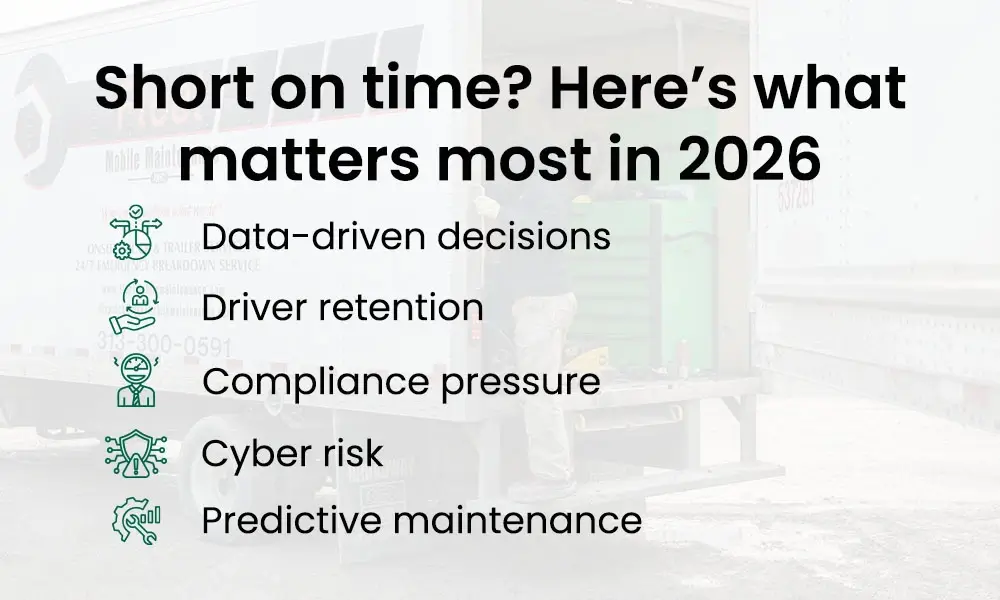
10 Fleet Management Industry Trends
As we are already headed towards 2025, it is getting more and more complicated to determine what is thought-provoking in the world of trucks and logistics. Keeping aside the marketing hype, these are the fleet management industry trends that you need to know about when keeping the books and the trucks in motion are part of your job description. These are the changes that are taking the future mode of our operations, handling and operating our human resources, and driving on the highways. Under the hood or on the cloud, the following are fleet industry trends that you need to know so you can stay competitive and maintain healthy margins.

1. The Data Flood: NextGen Triage Telematics & AI Analytics
We are way beyond the times of merely monitoring the location of a truck. The current Telematics trends are all about gathering and deciphering data, and not just any data, but massive quantities that include driver behavior, engine diagnostics, and even fuel consumption down to the very last drop. The paradigm shift is not about data abundance but instead its value, specifically the need to extract actionable insights from it. These tasks are being replaced by machine learning technology and AI, finding patterns that a human eye could not, as it would be impossible to examine continuous fleet analytics data using traditional practices without leaving some loopholes.
This means predictive maintenance warnings before a breakdown leave you stranded on the shoulder, optimizing routes for fuel efficiency in real-time, and even identifying risky driving habits before they lead to an incident. It’s sort of a master mechanic, a veteran dispatcher, and a risk assessor in a single person, working nonstop around the clock to avert avoidable expenses and turn raw data into actionable insights. This degree of intellectuality is paramount to getting knowledge on the interchanging relationship between fleet telematics and fuel efficiency. Fleet management trends now rely heavily on these advanced analytics.
2. The Electric Revolution: EV Adoption & Infrastructure Planning
Those out there doubting the existence of a usable electric truck are sorely misguided. Though a complete transition to electric vehicles for everyone may still be a couple of decades away, there are already operators adopting them in last-mile delivery and regional hauling. On a fleet management market trends basis, there is a gradual, albeit slow, shift toward the use of these vehicles. This isn’t just about reducing emissions; it’s about long-term operational cost savings as battery technology improves and charging infrastructure expands. Even then, transitioning is not just a matter of swapping a diesel engine for an electric motor. Charging logistics, range anxiety, battery degradation, and specialized maintenance all come into play. Building out charging capabilities and understanding available grants for the transition is the way forward. This ties into upcoming regulations, too, with IRS guidelines in the Inflation Reduction Act offering incentives for alternative fuel vehicles.

This is great news for fleet turnover; retiring older vehicles and investing in zero-emission vehicles is a better proposition than ever. The Commercial Clean Vehicle Credit generally offers a lesser of 15% of your basic cost (30% if not gas/diesel) or an incremental cost. The maximum credit is $7,500 for vehicles under 14,000 pounds GVWR and $40,000 for others. Eligibility rules for businesses and vehicles apply. It’s about looking ahead to where the fleet management industry is inevitably headed and positioning your fleet to capitalize on it rather than getting left in the dust.

3. Driver Retention & Well-being: Beyond the Paycheck
Quality drivers are hard to get. The competitive market has become so competitive like searching for a four-leaf clover in the desert. The new fleet management industry trends are posing serious problems in the retention of drivers, and the problem is one of the greatest today. These days, it is not only a matter of the paycheck, but the sustainability, the appeal, and the allure of that job. Driver-centered features, including in-cab advanced safety systems, flexible scheduling, and support programs, are now making their way to the top of the list of priorities designed by fleets, and technology is able to play a significant role.
The experience and the turnover are being improved with the assistance of user-friendly dispatch apps, real-time in-cab monitoring systems, and driver coaching campaigns. On the one hand, the driver classification issues, especially constantly fighting over the independent contractor status, introduce another set. The battle between workers being classified as independent contractors or employees has been massive. Independent contractors may look free on paper, but they often get no health coverage, job security, or training. It’s a tough call for both sides. In the real sense, firms are not left out in terms of power. There is no light at the end of the tunnel of this battle, and hence, fleet managers have to keep an eye on it.
When a driver feels appreciated and feels secure, and also supported, then chances are high that such a driver will remain. Intelligent managers of a fleet understand that investment in their workforce is one of the noble returns on investment they can ever get, which is going to directly affect everything, including on-time deliveries, low-accident rates, etc.
4. Regulatory Compliance & Environmental Reporting
It goes without saying that fleet management industry trends change continually, and it is also an ongoing battle to keep up with all regulations, as any fleet has to do. The new fleet management market trends, however, are more concerned with the environmental policies and open reporting. Ranging from emissions requirements to fuel performance requirements, fleets are facing pressure to use sustainability.
Running a business fleet of any kind is rife with several thousand details, down to maintenance and logistics, in order to prevent the business from going off the rails. Besides, the government regulations, though essential as regards safety and impact on the environment, come as an additional burden. Commercial fleet management trends imply compliance with the laws countrywide related to drug testing, working time, emissions, and maintenance. These laws are not ever constant, and they tend to change with the changes in politics.
It is all about money and safety. The rules are used to ensure safe conduct, operation, vehicle, and environment for the drivers and others. They avoid injuries, crashes, and distractions. The breaking of regulations carries down with charges as well as fines, yet adhering to them enhances the efficiency, safety, and retention of the employees. Those reasons may be different, but the results tend to be positive.
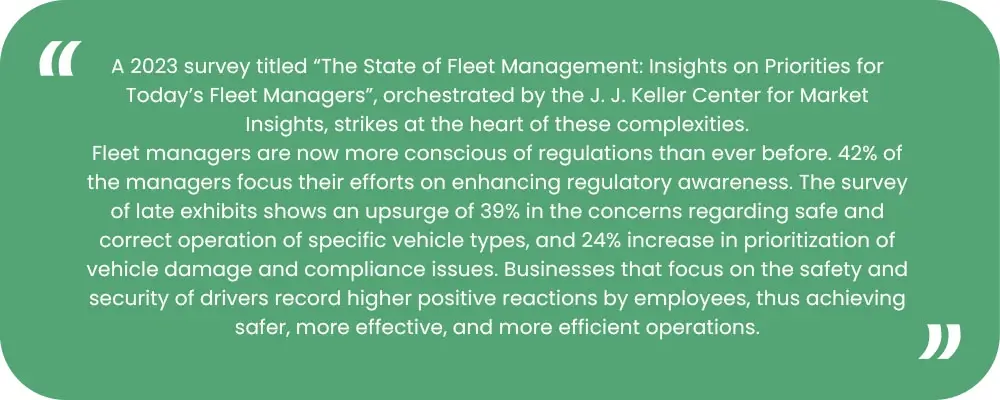
The future regulations on fleet management trends keep on varying. As an example, one can mention the present EPA regulations, of 1,100 pages of exhaustive rules, which aim at reducing fleet emissions, to be reached in 2027. Single legislations are minimally tied, and single rules have ramifications in other industries. A case in point is the fact that the next farm bill is worth monitoring, particularly in response to agricultural fleets.
“We estimate that the final rule will reduce [NOx] emissions from heavy-duty vehicles in 2040 by more than 40%; by 2045, heavy-duty NOX emissions will be almost 50% lower than they would have been without this action.”
-EPA’s final rule, officially published on Tuesday, Jan 24, in the Federal Register
In this case, you are not just simply using technology to monitor and minimize your carbon footprint, but you are also making sure that your trucks and trailers that you use in the heavy-duty segment fulfill the emission requirements. Naturally, available options extend beyond the avoidance of the penalties; being environmentally friendly in the long term can be a competitive advantage as well, attracting the attention of conscious customers and cutting the costs, keeping further operations.
5. Advanced Safety Systems & Proactive Risk Management
Safety has always been paramount in the trucking industry, and proactive safety systems are becoming increasingly sophisticated. It goes well beyond just wearing a seatbelt or having good tires. The fleet management trends show a significant adoption of advanced driver-assistance systems (ADAS) technologies such as automatic emergency braking, lane-keeping assist, blind-spot monitoring, and adaptive cruise control. These systems are not designed to avoid accidents; they essentially change how drivers engage with the vehicle and the road. Furthermore, fleet industry trends are shifting towards proactive risk management that goes beyond the tech, including monitoring telematics data to identify drivers at risk of accidents, implementing training programs, and developing fleet accident management protocols.
Even mandatory speed governors, using electronic control units to restrict truck speeds, are under scrutiny. Proponents claim slower speeds reduce collisions and injuries, while opponents cite increased driver frustration and potentially unsafe conditions. Though many fleets use them, national mandates face resistance due to varying road conditions and policies.
As a result, these systems are likely to prevent incidents from happening, which, in turn, minimizes costly vehicle downtime, lowers insurance costs, and, most importantly, saves lives. For a deeper dive into common incidents, understanding the most common fleet accidents can provide invaluable insights.
6. Supply Chain Resiliency & Optimization

These last years have shown everyone how fragile global supply chains are. That lesson has hammered home a crucial fleet management market trend: the fundamental need for greater resiliency and optimized logistics that go beyond simply moving goods. Today, fleet managers are integral parts of the supply chain, using adaptive routing, real-time tracking, and collaborative software to mitigate disruptions.
Smart shipping requires optimization of every shipment by reducing empty miles, leveraging backhauls, and increasing load utilization. Enhanced communication technology allows better coordination with suppliers, customers, and warehouses, which helps smooth out the turmoil on the roads.
7. The Rise of Predictive Maintenance & IoT
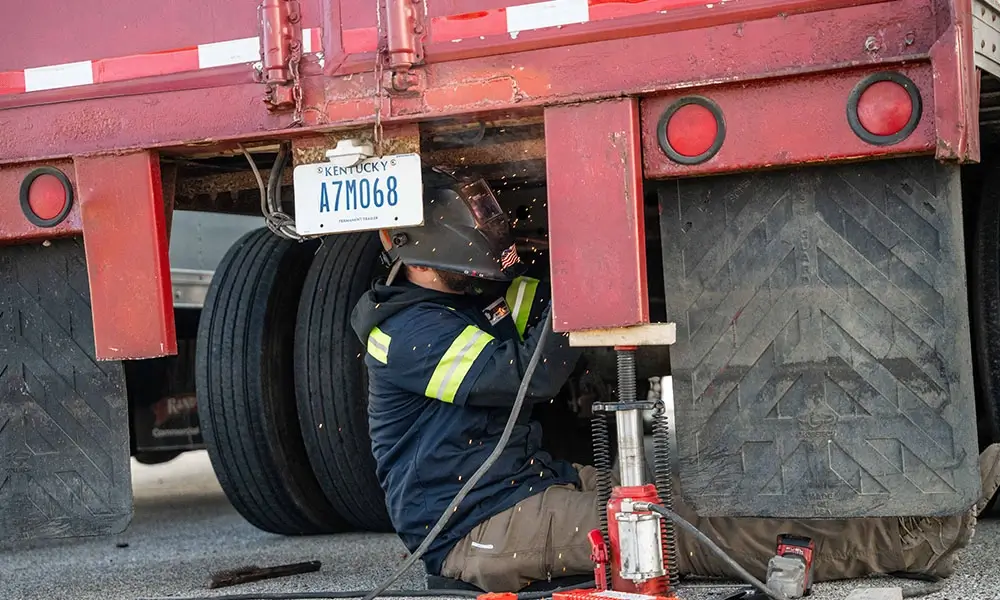
These days, nobody allows a vehicle to just die a major death before he or she take it to be serviced in a very graceful way. Predictive maintenance has already become a stable trend in the fleet management industry with the introduction of IoT and vehicle surveillance systems, and is no longer a fiction. All components of the vehicle are now fitted with sensors that check an enormous number of parameters: pressure in tires, temperature, and level of oil, viscosity, and wear and tear of the brake pads.
The given data is processed and analyzed with the assistance of modern AI systems to give a credible suggestion about the possible component failures. This enables fleet managers to carry out voluntary maintenance at pre-scheduled downtimes, as opposed to reactive maintenance upon flawed repairs and unexpected setbacks, which are both pricey. The strategy would not only reduce the cost of maintaining vehicles but also eliminate lapses in service and facilitate contract renewals, eliminating the possibility of loss of time through deadlines. Finally, it makes the fleet last longer in operation, safeguarding the investment. It’s not about waiting in the shop but rather keeping your iron on the highway, making money every mile.
8. Mobile-First Fleet Management Solutions
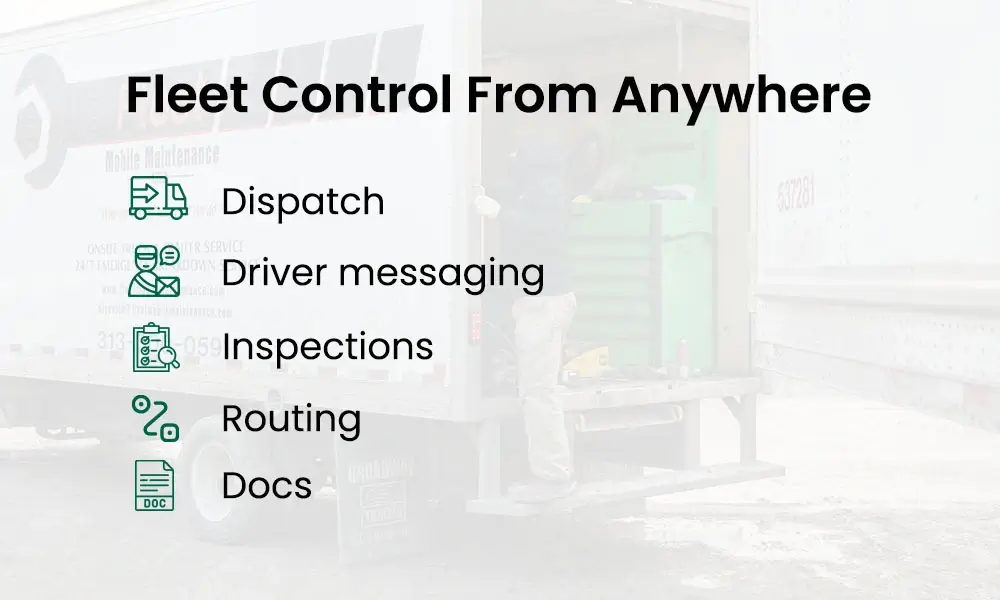
Sitting at the desk is not your thing in the trucking business. There is no rest for the fleet experts since they constantly travel in the yard, engage in discussion with drivers, or are on the road. This is why the tendency to move into mobile-first fleet management is one of the most essential developments. Office coworkers and drivers can now use advanced technologies on their smartphones and tablets in order to handle dispatching tasks, inquire about delivery, pre-trip inspection, and capture accident events, and inquire about critical information about the vehicle wherever he/she is. The use of quick access to this information promotes communication, speeds up the delivery of information delivery and minimizes the use of paperwork. It boosts efficiency in operations, and the system makes document management a nightmare by far since important information is just a tap away, whether at the terminal or at the highway itself, 50 miles away.

9. Cybersecurity in Fleet Operations
You may believe that cybersecurity is the issue of IT departments and corporate networks, but you are wrong. With trucks getting more tech-heavy by the mile, fleet cybersecurity has become one of the most significant trends in the field of fleets. Among the risks are delicate operational information (route, cargo, driving data) to possible remote access or control of vehicles. It may include bringing business to a standstill, loss of confidential data, or taking control of systems in vehicles.
The supervisors of the fleet must be vigilant to defend their telematics infrastructure, dispatch applications, and intra-board command and control systems. These include using robust access codes, regularly updating the software in a system, and educating all ranks of personnel on the guidelines of cyber hygiene practices. It is all about your protection, your property, and your image in a world where we are becoming worldwide and communicating all the time.
10. Customized Fleet Solutions & Managed Services
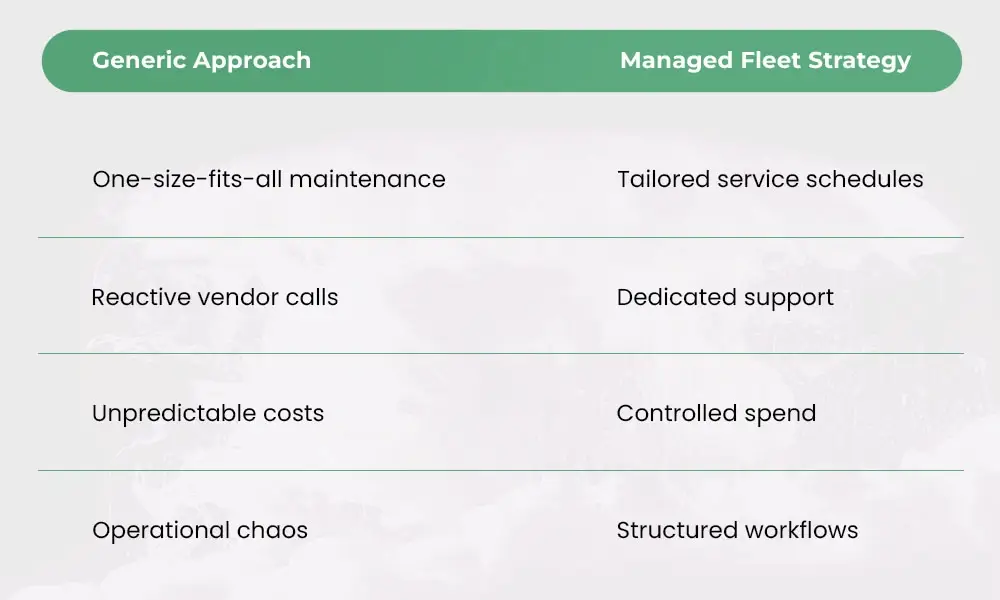
Fleets are not all similar, and using a generic strategy will never be effective. The onset of customization, as well as the high use of managed services in fleet management industry solutions, is continuously gaining ground. The same can be said of a small regional fleet and a national heavy-haul operation that have different needs. It is necessary to have special sets of technology, special maintenance cycles, and a special operational strategy. The need to want to manage all aspects in-house is also becoming the norm, but most companies are finding it more effective and cumbersome. Involvement of specialists in vehicle acquisition, financing, maintenance, and compliance enables the fleet owners to concentrate on their main businesses.
This is where EPIKA Fleet Services steps in, assisting with efficient fleet management by providing the essential support needed to keep your trucks on the road and your profits flowing.

Ready to Future-Proof Your Fleet?
Here is an overview of the most prominent fleet management trends that affect us nowadays. It is not always a smooth path; nevertheless, people who have gone around the block know that every challenge in fleet management is a chance to tighten operations and outpace your competitors. The terms are not mere marketing buzzwords but reflect the essential changes to the operational regimes, risk management, and sustainable development. A future fleet will be constructed out of state-of-the-art telematics trends and artificial intelligence adjustments to driver safety and proactive care of the vehicle. Do not become the one who sits in traffic as your rivals fly by you. Spare the money to invest in adaptive, progressive, and proactive talent, which can put your fleet ready to face any situation ahead. It is not a matter of working more but working smarter and seeing that every mile translates to some value.
FAQ’s
What are the most important fleet management trends in 2026?
Key fleet management trends in 2026 include AI-powered telematics, predictive maintenance, electric vehicle (EV) adoption, advanced safety systems, mobile-first fleet solutions, cybersecurity enhancements, regulatory compliance updates, and improved driver retention strategies.
How are electric vehicles impacting fleet management strategies?
Electric vehicles are increasingly used for last-mile delivery and regional hauling. Fleet operators are evaluating charging infrastructure, battery performance, total cost of ownership, and available tax incentives. EV adoption helps reduce emissions and long-term fuel expenses.
What tax incentives are available for commercial electric vehicles?
Businesses may qualify for federal incentives under programs like the Commercial Clean Vehicle Credit. Eligible vehicles can receive credits up to $7,500 for lighter vehicles and up to $40,000 for heavier vehicles, depending on specific requirements and eligibility criteria.
What challenges do fleet managers face with regulatory compliance?
Fleet managers must stay updated on evolving laws related to emissions, driver hours-of-service, maintenance requirements, and safety protocols. Non-compliance can result in fines, downtime, and reputational damage.
What are advanced driver-assistance systems (ADAS) in fleet vehicles?
ADAS includes technologies such as automatic emergency braking, lane-keeping assistance, adaptive cruise control, and blind-spot monitoring. These systems enhance driver safety, reduce accident risks, and may lower insurance costs.